Archaeology & History
Ancient Roman Cargo Lost for 2,000 Years Resurfaces in Swiss Lake
The cache of ceramic plates, bowls, and goblets is completely intact.
by
Vittoria Benzine
 Share This Article
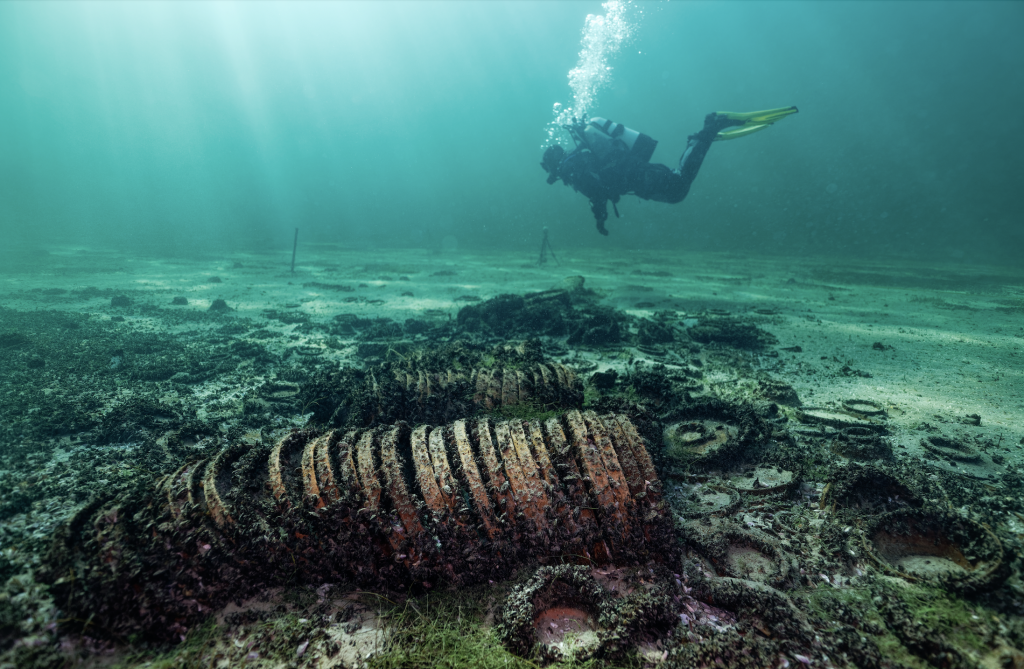
Earth’s vast oceans are home to hundreds of thousands of of marine species—and some three million lost boats. Last month, the Swiss nonprofit Octopus Foundation teamed up with the Cantonal Archaeology Office of Neuchâtel and the Archaeological Service of the State of Fribourg to help surface another such shipwreck from Lake Neuchâtel. There, divers found a 600-piece haul of 2,000-year-old ceramics, weapons, and tools, all miraculously preserved by sediment that’s since washed away due to the Jura water correction projects.
Octopus Foundation has worked here since founder Julien Pfyffer met Neuchâtel’s underwater archaeologist Fabien Langenegger in 2018. “He knew the existence of three different wrecks that needed to be studied because of the underwater erosion,” Pfyffer told me over email.
In 2024, engineer Fabien Droz spotted their latest project, named the Eagles‘ wreck, from above, via drone. That November, Langenegger and Pfyffer conducted a dive to confirm and evaluate the site, 26 feet below surface. They pulled several specimens for “rapid analysis,” including a piece of wood. Dendrochronological dating placed the wreck between 50 B.C.E. and 50 C.E.—the very start of the Roman Empire.
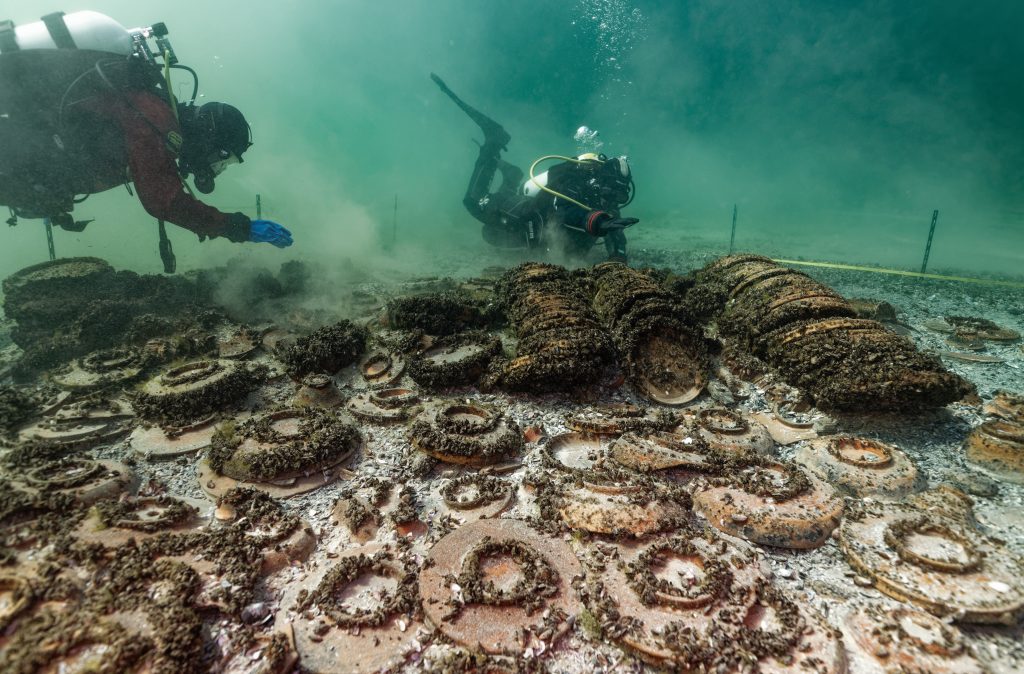
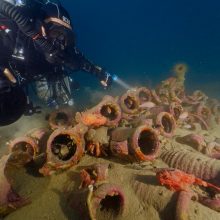
Divers examining the scores of plates at the heart of the scene. Photo courtesy of Octopus Foundation
Soon enough, researchers realized that the large body of ceramic plates, bowls, and goblets clustered at the heart of this 200-by-80 foot area were brand new, “most likely recently produced by a potter and intended for sale,” Octopus Foundation said. Unfortunately, any potter’s mark betraying their origin remains absent. Initial analyses indicate they’re from the Swiss Plateau.
As such, this Swiss shipwreck stands apart from others that Octopus Foundation has helped surface at Lake Neuchâtel. In fact, Pfyffer considers it a once-in-a-lifetime find. “Usually, objects found in the ground were used, sold, broken, trashed, or buried with the dead,” he said. “Here, the accident is providing us brand new objects that very probably will become a reference for [this] specific time period.”
The ship itself remains missing. “My positive way of looking at things makes me feel that maybe relieved by the heavy weight of the cargo, the sailors and roman soldiers saved their boat,” Pfyffer said.
Thirteen experts returned in 2025 to map and excavate the site more fully—gathering 150 objects for conservation at the nearby Laténium archaeology museum in the process. They also found shards of two ceramic amphorae used for olive oil or wine further afield, plus wooden and metal chariot wheels.
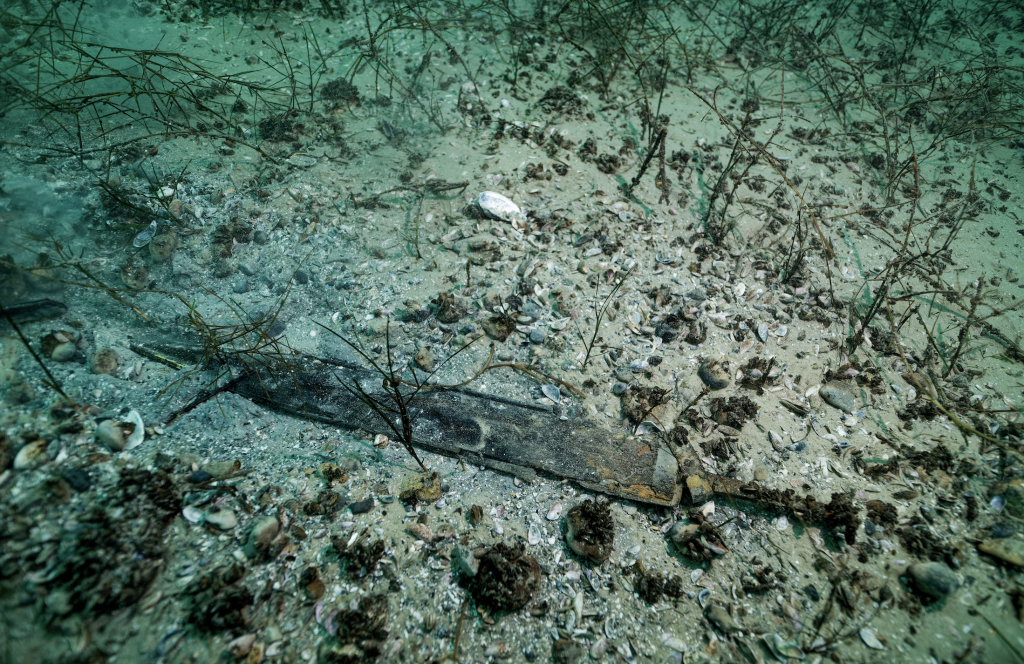
A Roman sword. Photo courtesy of Octopus Foundation
Crews wouldn’t return for another year. They kept the wreck site secret. Octopus Foundation even developed an underwater surveillance system.
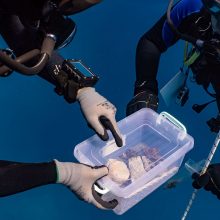
Last month, they retreived the remaining 450 artifacts. This proved difficult, since the delicate ceramics were largely stacked. Metal tools and weapons turned up too—leading the team to believe this cargo was heading for a Roman legion settling the Rhine. A miraculously immortalized wicker basket held a smattering of different ceramics, perhaps used by the ship’s cooks.
The objects will go on display at the Laténium, pending study and conservation.

Related Articles
-