Archaeology & History
Lost Parthenon Piece Unearthed From Lord Elgin’s Shipwreck
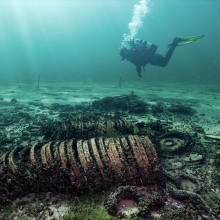
Divers with the underwater antiquities unit of the Greek Ministry of Culture made the discovery in the summer of 2025.

Divers with the underwater antiquities unit of the Greek Ministry of Culture made the discovery in the summer of 2025.
Richard Whiddington
 ShareShare This Article
Greek authorities have finally reclaimed a lost fragment of the Parthenon, though not in the manner they might have hoped. In the summer of 2025, an excavation carried out by the underwater antiquities unit of the Greek Ministry of Culture uncovered a small piece of marble that likely once belonged to the ornamental crown of the 5th century B.C.E. temple.
The dives took place off the coast of Kythira, an island in southern Greece, where in 1802 a ship owned by Lord Elgin sank as it was transporting a significant portion of the Parthenon marbles and Acropolis sculptures. The small marble fragment, which measures roughly three inches wide and two inches tall, features a small water-drop shaped ornament known as a gutta and is thought to have belonged either to the horizontal beam atop the columns or from the decorative edge of the roof.
Although archaeological research into the fragment is ongoing, initial signs are promising with the Greek Ministry of Culture noting in its press release that “the dimensions of the drop can be compared with the measurements of Anastasios Orlandos for such decorative features of the Parthenon.” Orlandos was a 20th century historian of architecture who created modern measurements for the Parthenon.
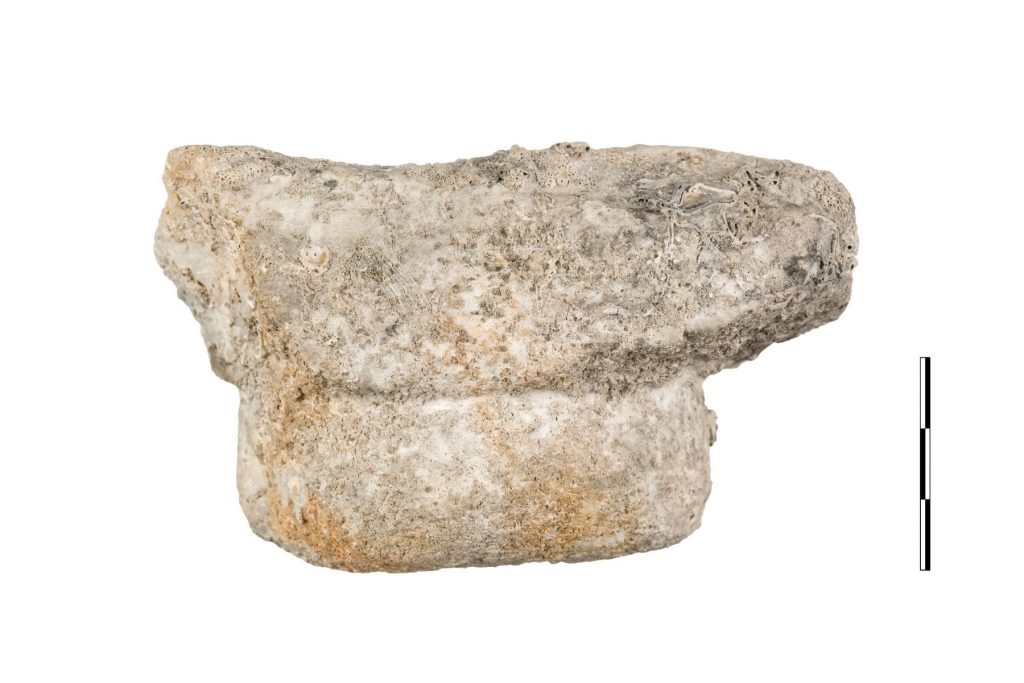
The small marble fragment found by divers. Photo: courtesy Greek Ministry of Culture.
The discovery of the Parthenon fragment was a bonus for an excavation that primarily set out to explore the west and north sides of Elgin’s ship, the Mentor, which went down more than two centuries ago during a storm—all men on board survived. Owing to the manner in which Lord Elgin’s secretary, William Hamilton, retrieved the cargo, little of the Mentor has remained. The ship was wedged between rocks and so Hamilton hired sponge divers from the eastern Mediterranean to break up the ship’s deck and reach the crates below. Over the course of two years, all 17 crates of marbles were rescued.
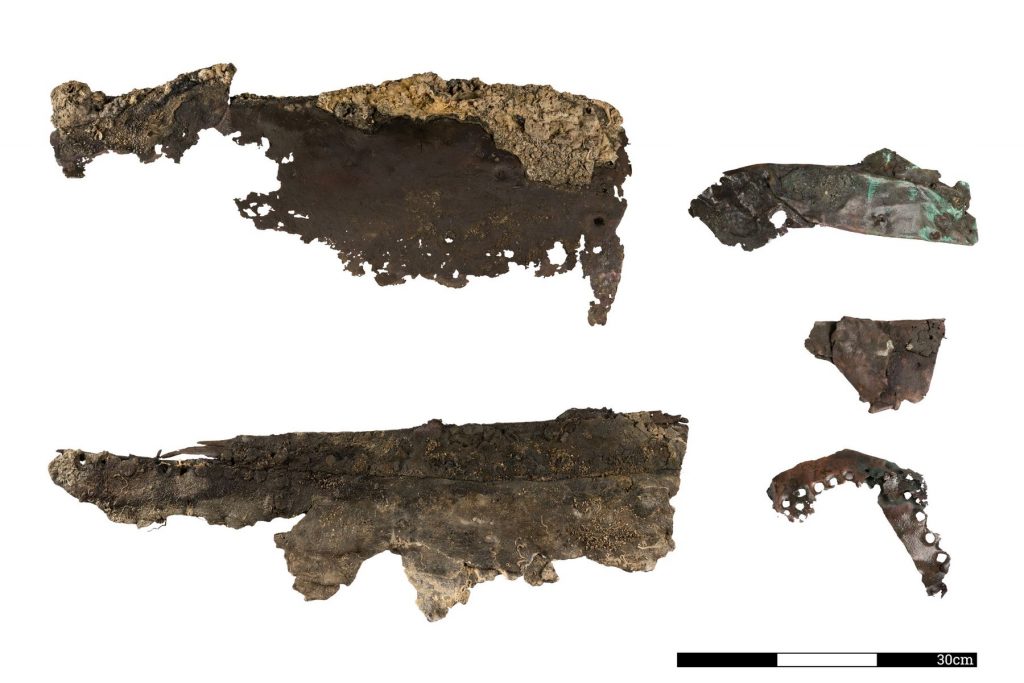
Fragments of the ship’s external copper plating. Photo: courtesy Greek Ministry of Culture.
As a result of these methods, the ship’s wooden hull was exposed, and so decomposed rapidly. What underwater archaeologists found in the trenches they dug alongside the remnants of the hull were more durable materials. These included rigging components, everyday pottery, the copper sheathing and lead reinforcements that once protected the Mentor, and a fragment of clay that likely insulated the ship’s hearth.
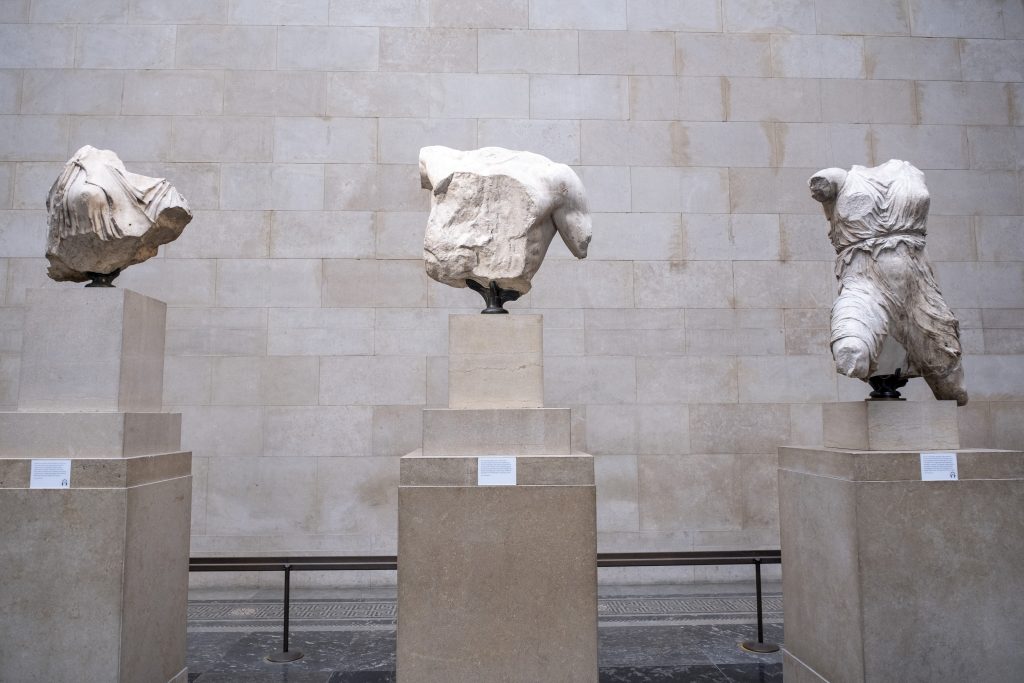
Parthenon sculptures of Ancient Greece, fragments, aka Elgin Marbles at the British Museum on 25th March 2025 in London, United Kingdom. Photo: Mike Kemp/In Pictures via Getty Images.
In total, Lord Elgin shipped roughly 200 crates from Greece back to Britain, though it would take years for them to all arrive in London. In 1816, Elgin was facing financial calamity and sold the Parthenon marbles to the British government for £35,000 (roughly $5.9 million today). They have been on permanent display at the British Museum since 1817 and though Greece has formally calling for their return since the 1980s, such a move is blocked by a U.K. law forbidding the British Museum to deaccession objects in its collection.