Archaeology & History
Colosseum Facelift Restores Ancient Southern Entrance to Its Former Glory
The restoration of the Roman landmark follows the opening of the Commodus Passage last year.
by
Richard Whiddington
 Share This Article
The southern entrance of Rome’s Colosseum has been given a monumental facelift in a four-year project aimed at recreating the scale and integrity of the original design.
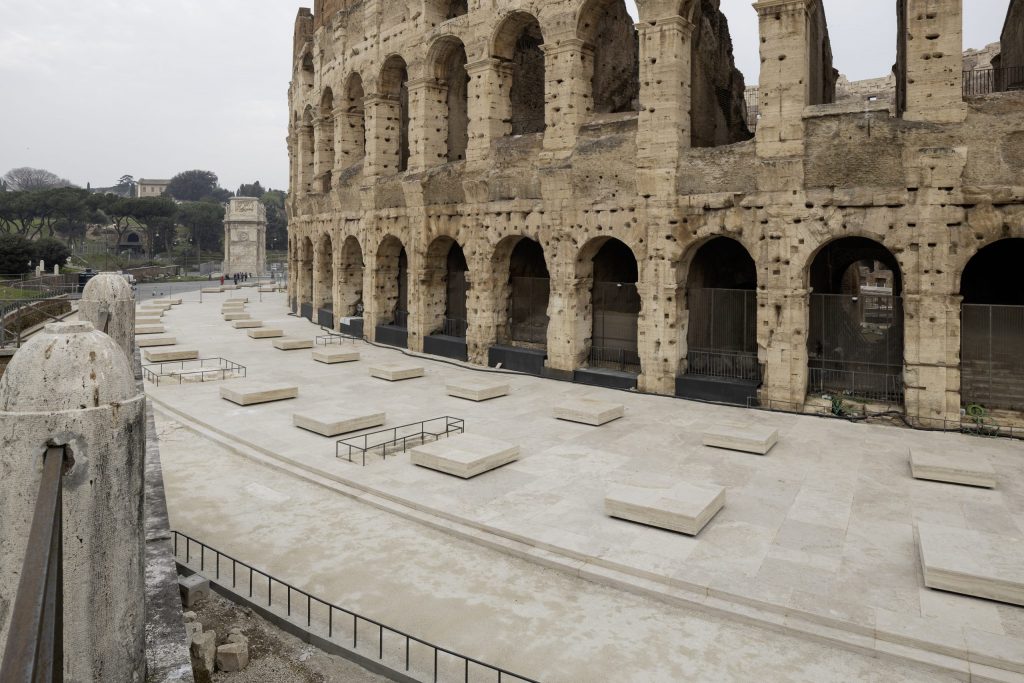
The project enhanced a semicircular piazza outside the ancient arena known as the southern ambulatories, a ground-level pedestrian zone that Roman spectators passed through before taking to their seats. In its heyday, the southern façade was comprised of travertine-paved arcades and marble columns, some reaching more than 160 feet in height.
By the 7th century C.E., however, the grand entrance had partially collapsed due to soil instability, a process furthered by earthquakes, the reuse of materials, and looting. The deterioration was so extensive that in time the southern ambulatories were used for stables and animal enclosures. In the 19th century, brick buttresses were added in an emergency measure to prevent further collapse.
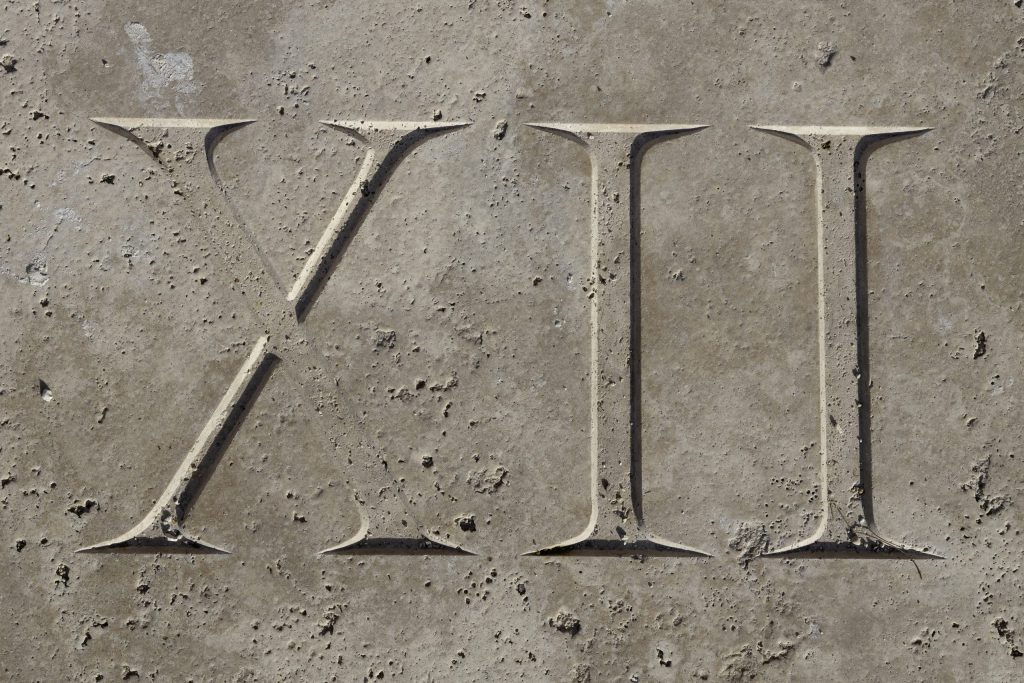
The gate numbers are indicated alongside the travertine blocks. Photo: Simona Murrone/The Archaeological Park of the Colosseum.
Today’s renovation, led by the studio Stefano Boeri Interiors, hasn’t resurrected the imposing columned arcades, instead it has lowered the piazza to its original height, reintroduced a pair of approaching stairs, and relaid the flooring using travertine—sourced from Tivoli quarries near to those used for the construction of the Colosseum. At the places in the piazza where the pillars once stood, the redesign has introduced square blocks of travertine marble for visitors to sit on. On the ground beneath each arch, visitors can read the Roman numerals that indicate the seat sections.
“[The project] has finally restored the perception of the monument’s original size and floor level,” architect Stefano Boeri said in a statement. “It also offers the public the opportunity to approach its walls and imagine the rhythm and sequence of the ambulatories and arches, now lost. It’s a respectful and useful project that completes research carried out by the archaeologists of the Colosseum Archaeological Park.”
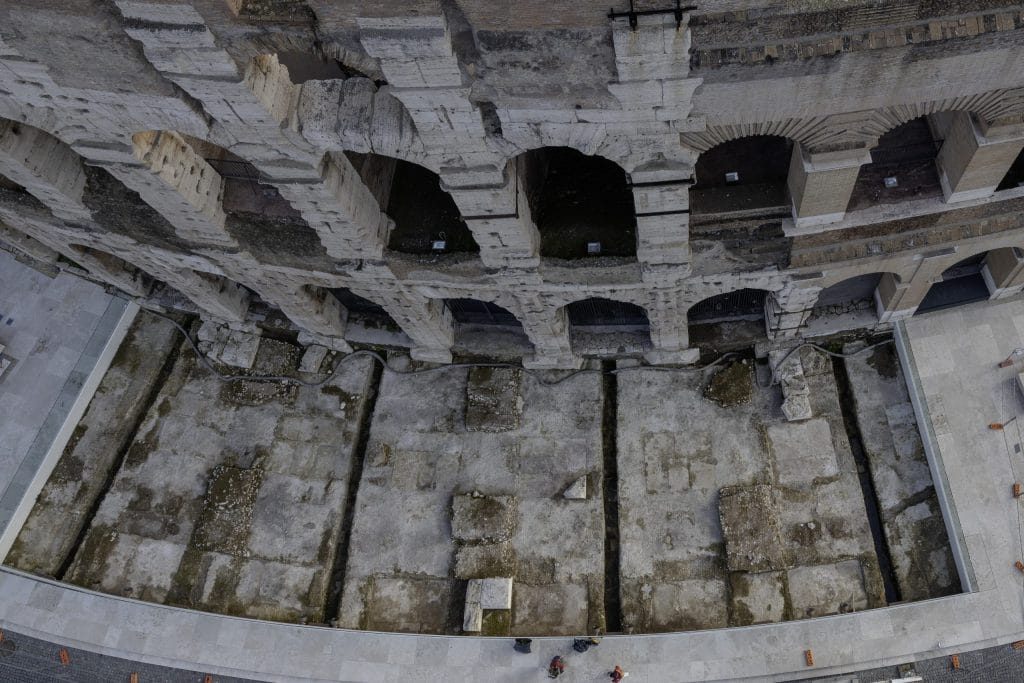
A section of the southern entrance way was left in its original condition. Photo: Simona Murrone/The Archaeological Park of the Colosseum.
The renovation project has left one section of the piazza (between arches 65 and 71) in its original condition, offering a view of the structure’s foundations that have helped researchers understand the Colosseum’s hydraulic system. In the process of digging down to the southern entrance’s original level, archaeologists discovered coins, statues, animal bones, and gold jewelry.
The piazza renovation was partly financed by funds drawn from the development of a new metro line in Rome, with one station opening deep beneath the Colosseum. The initiative follows the restoration of a secret underground entrance, the Commodus Passage, which opened to the public for the first time in October last year. Named after the vindictive and incompetent 2nd-century Emperor Commodus, it offered rulers a means of accessing the arena without mingling with the masses.

Related Articles
-