Art History
Lost Lincoln Portrait From Teddy Roosevelt’s Office Reemerges After a Century
The work hung in the White House for six years.
by
Vittoria Benzine
 Share This Article
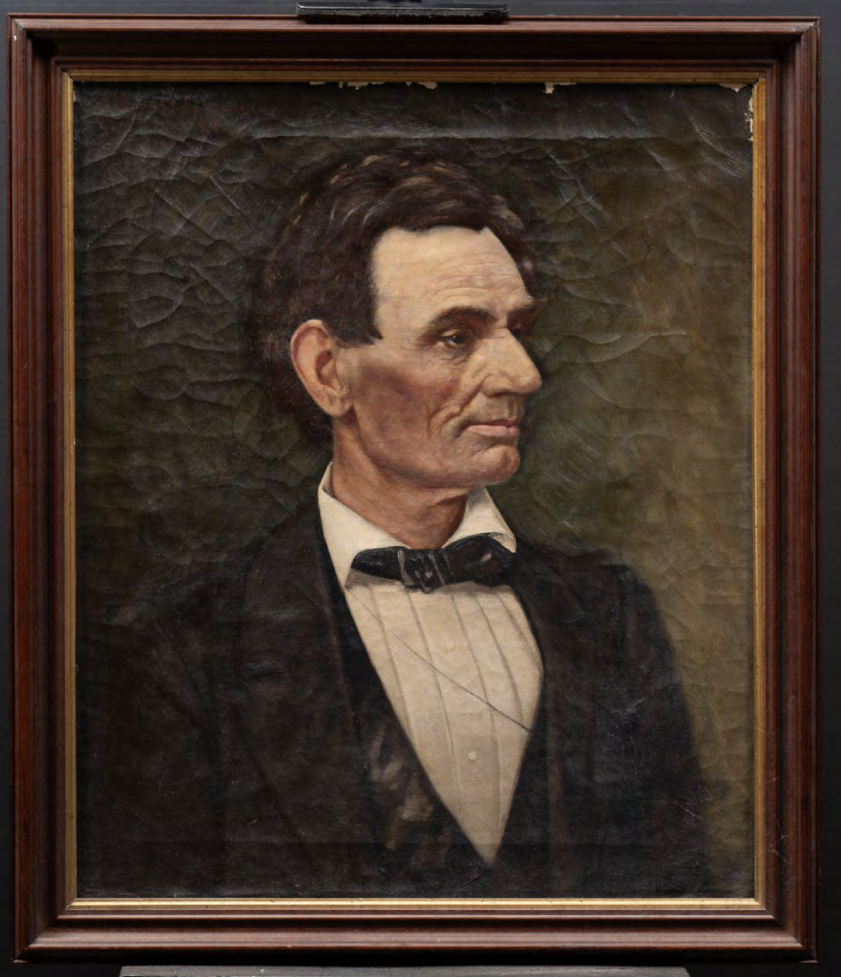
A portrait of Abraham Lincoln that once hung in the office of president Teddy Roosevelt has resurfaced from the collection of the descendants of two Westchester antique dealers. Now, when the much-awaited new Theodore Roosevelt Presidential Library (TRPL) opens in Medora, North Dakota on July 4, guests will get to admire American realist Ernest Wells’s depiction of the Great Emancipator the same way Roosevelt did.
Roosevelt nurtured a renowned love for Lincoln. His father had been friends with the wartime president, and co-developed the Allotment System for him. Roosevelt witnessed Lincoln’s funeral procession as a child, and started collecting Lincoln memorabilia early on. John Hay, Roosevelt’s eventual Secretary of State, even gave Roosevelt a ring containing a lock of Lincoln’s hair, which Roosevelt wore to his second inauguration.
“Everyone knew about it,” Susan Sarna, TRPL’s senior curator of collections, told me over the phone about Roosevelt’s admiration for Lincoln.
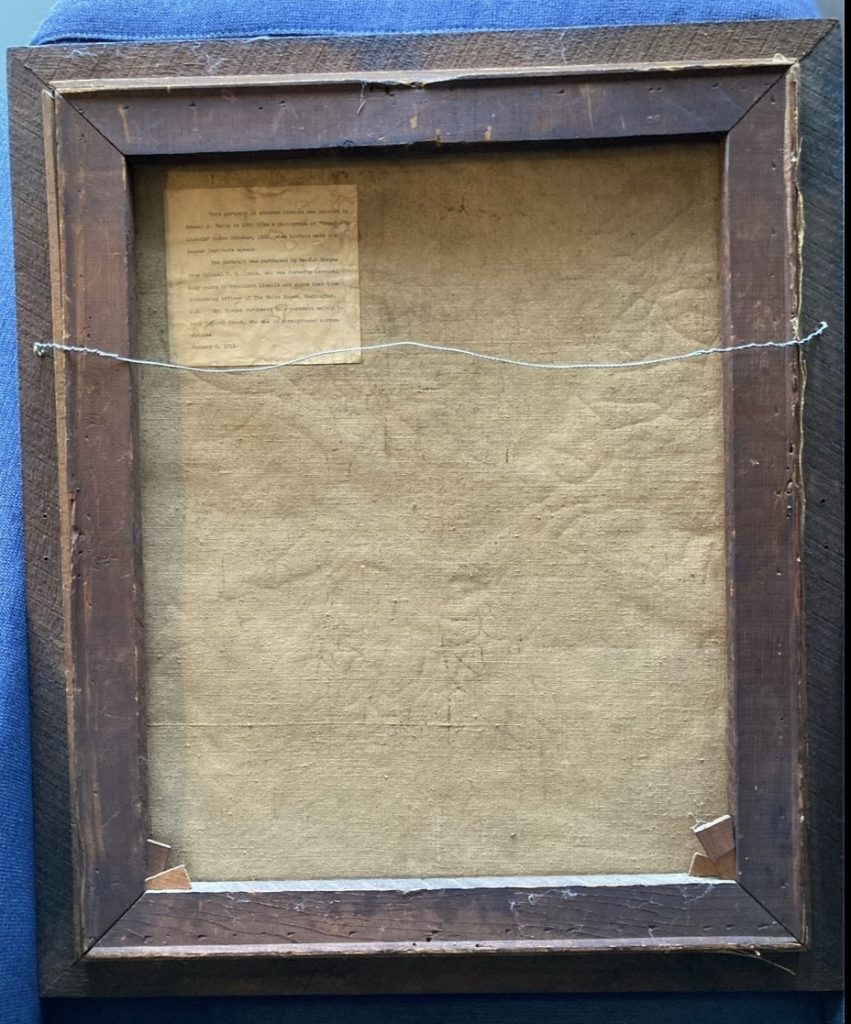
The Lincoln portrait’s verso, featuring Bella da Costa Greene’s typewritten transcription of Crook’s letter. Photo courtesy of the West Lake Art Conservation Center
Wells gifted Roosevelt this Lincoln portrait, which he painted from a photograph taken on June 3, 1860 in Lincoln’s hometown of Springfield, Illinois. “I am greatly pleased with the Lincoln picture,” the president wrote to Wells on October 5, 1903. “It is a reproduction of the photograph of him which, to me personally, appeals most.”
Wells’s painting hung in Roosevelt’s office throughout his term. The 26th president was known to turn to the portrait for guidance, mulling, “What would Lincoln do?” After he stepped down, Roosevelt gave the work to Colonel William H. Crook, a family friend who’d served in the White House for twelve administrations, and even as Lincoln’s first bodyguard.
Why didn’t Roosevelt keep the artwork? “He already had a print of Lincoln hanging on his wall in his library,” Sarna mused. “Also, he had a big habit of giving things to people—guns, books. For instance, later on in life, he gave his buckskin suit to one of his good friends.” Gifting the portrait was actually a sign that Roosevelt loved it. “He only gave away stuff that meant something to him,” Sarna added.
Unfortunately, Crook ran into money problems and sold the work to J.P. Morgan via the legendary librarian Belle da Costa Greene. “This portrait hung in the President’s office until the close of the Roosevelt administration,” Crook wrote to Greene.
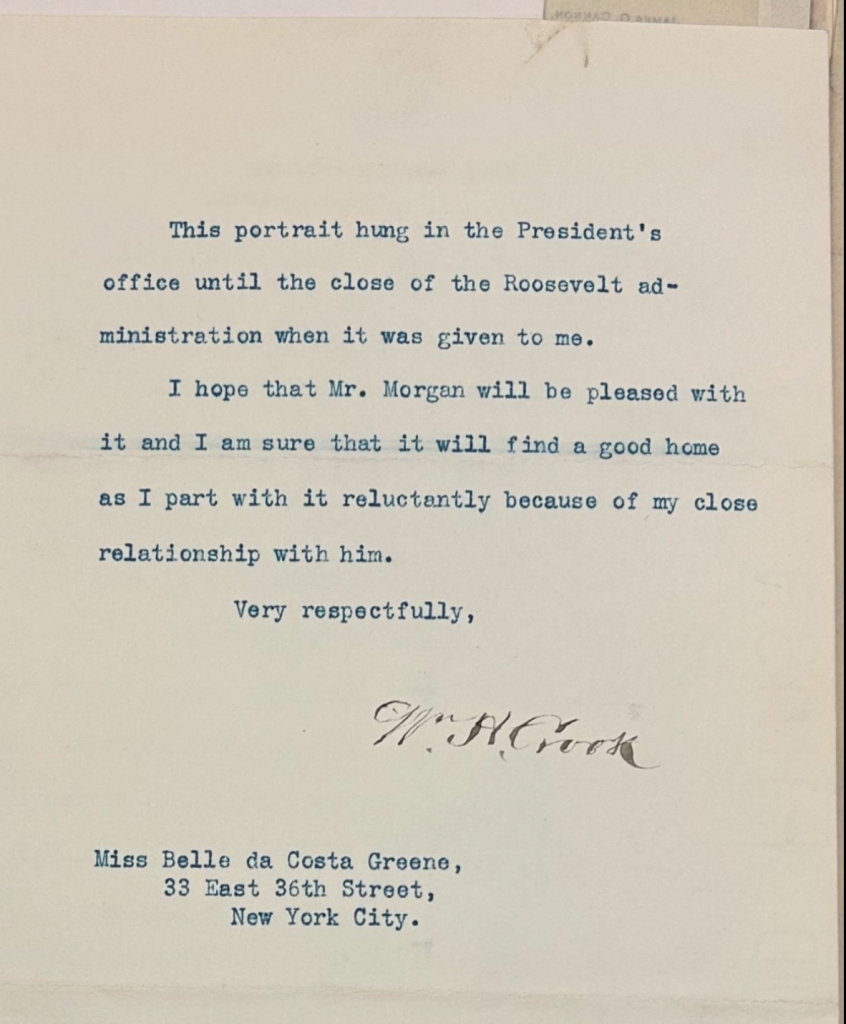
Da Costa Greene’s typewritten copy of Crook’s letter, affixed to the back of the Wells painting. Photo courtesy of the West Lake Art Conservation Center
Morgan bought the painting for $300 in January 1912, and died the following year. Much of his holdings were sold off shortly after, as the Morgan Collection became the acclaimed Morgan Library & Museum. Museums got first dibs. Alas, Wells’s portrait was not selected by any institution and was instead acquired by a private collector. Records of its purchase were lost in the shuffle. The work landed in Westchester around the 1970s, and passed in 2021 to David Soderquist, who now owns it alongside his brother.
Da Costa Greene had typed up Crook’s letter offering to sell the artwork as a matter of record keeping. Her copy is pasted on the back of this painting. So, the brothers knew they had a piece of history. After five years conducting his own research on the work, Soderquist brought it to the TRPL. The institution showed the piece to top Roosevelt scholars, who confirmed its origins. “I’ve been writing about Lincoln art for 50 years, and this is one of—if not the most-significant provenance stories I’ve ever encountered,” foremost Lincoln scholar Dr. Harold Holzer told Soderquist.
Soderquist has since offered the portrait to the TRPL on short term loan. After 33 years working at Roosevelt’s home, Sagamore Hill, which didn’t have a budget for acquisitions, Sarna is hungry to buy Wells’s portrait for the TRPL. A valuation has been reached, though it remains confidential. Over the phone, Soderquist told me he hopes the work finds a permanent home in a reputed museum, “for the American people to see.”
Correction (April 17, 2026, 9.15 a.m. ET): An earlier version of this article included the names of two antique dealers that should not have been published and incorrectly stated that one of them was deceased. It also incorrectly stated that Crook’s letter was affixed to the back of the painting, when it was in fact a typewritten transcription by Da Costa Greene. The article has been updated to remove the names and correct the record. We regret the errors.
This article has also been updated to reflect that a valuation of the painting has been reached and to include remarks by Soderquist.

Related Articles
-