Museums & Institutions
Experts Sound Alarm Over the New Normal of Museum Heists
“This is the dawn of the three-minute heist," warns one of the world's top experts on art theft.

“This is the dawn of the three-minute heist," warns one of the world's top experts on art theft.
Eileen Kinsella
 ShareShare This Article
Roughly five months after a brazen daylight theft at the Louvre museum in Paris saw thieves make off with a jewelry haul estimated at roughly $102 million (€88 million), another European museum has been hit.
In this case, it was a lesser-known regional museum in Parma, Italy, a villa that houses the Magnani Rocca Foundation. But the names behind these artworks stolen, in a daring middle-of-the-night break-in that took all of three minutes, are world-class—Paul Cézanne, Henri Matisse, and Pierre-Auguste Renoir. The estimated value of the stolen works is roughly $10 million.
“The Louvre theft was supposed to be a wake-up call to museums everywhere, especially small museums,” Christopher Marinello, CEO and founder of Art Recovery International, told me. “If you could hit the Louvre you could get in anywhere.” He thought the headline-grabbing theft would have prompted widespread reevaulation by museum security teams. But that does not appear to have been the case.
So, what happened this time around? How and why is this latest incident different from the Louvre theft, which targeted the royal crown jewels? How will investigations play out? And perhaps most importantly, what are the chances of recovering these priceless paintings? We put these questions to the world’s top museum security and art theft experts. Here’s what we found out.
“This is the dawn of the three-minute heist, and we’ve really got to take notice of this,” said Marinello, one of the world’s top experts on art theft. “With a crowbar, a ski mask, and three minutes, you can do almost anything. That’s what concerns me.”
However, Anthony Amore, director of security at the Isabella Stewart Gardner Museum in Boston and author of several books on art crime, begs to differ. “That’s not uncommon,” he said of the speed of the heist, adding that his research shows most thefts take between three to nine minutes.
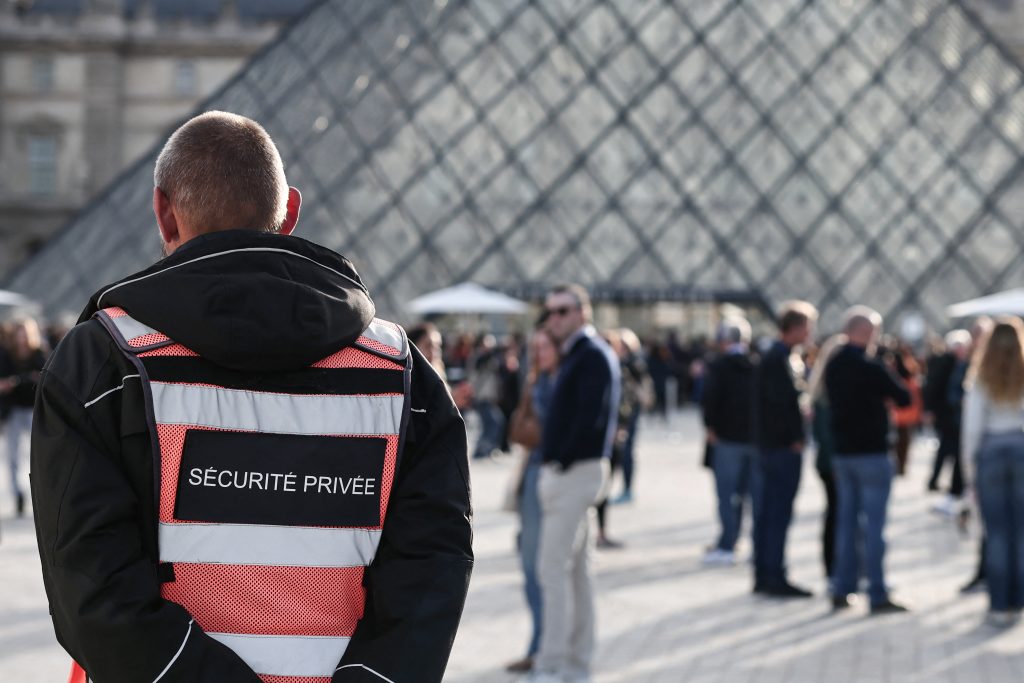
A security guard stands in front of the Pyramide du Louvre at the museum’s reopening on October 22, 2025, following the robbery. Photo: Thibaud Moritz / AFP via Getty Images.
The Louvre heist, for instance, took about seven minutes. Further, experts including Marinello and Amore noted how the jewel thieves in France bought some extra time by donning bright neon construction worker vests that helped them blend in before the guards and onlookers caught on to them.
“That’s why the Louvre thieves were able to take an extra five minutes because people saw them and were like ‘Oh, they must be part of the crew,” said Marinello.
To be fair, Marinello gives props to the Magnani-Rocca security team for its response time. “Four minutes is not a bad response team time for the security to have the police arrive. That’s pretty good for outside of a major city but obviously not good enough.”
Since little is known about the actual details of the theft, Amore questioned whether the break-in immediately tripped the alarm or if there was something of a delay. According to the BBC, museum officials said that the thieves seemed to have intended on stealing more were it not for the private collection’s alarms going off and police being called.
Amore wrote in his Substack column: “I doubt they were startled by the alarm. They’ve burgled before, and expect it. It’s curious that, based on reporting, the alarm took three minutes to be tripped.”

The Villa Magnani Rocca site of the Magnani Rocca Foundation Gallery in Parma, Italy. Photo: Roberto Serra – Iguana Press / Getty Images.
Unlike the Louvre heist—which took place during museum operating hours, was witnessed and documented by many onlookers, and immediately went viral around the world—the Magnani-Rocca robbery happened in the middle of the night on March 22. The museum was closed the next day. News about the theft didn’t start trickling out and circulating until several days later in local media reports. Amore told me it’s not clear if the villa had overnight guards onsite. That might raise the potential for the theft to have been an inside job.
The museum did not respond to my request for comment.
Marinelllo, who has worked closely with the Carabinieri on previous cases, told me there might be a good reason for this. “Initially they like to keep things close to vest, do their investigative work, and of course check out any possible insider connection,” he explained. “By going public, it’s their way of saying: ‘We don’t have any concrete leads and we’re now pleading to the public for information and letting everyone know that these were stolen. If they should show up, let us know.”
“The hope is that these guys who stole these [paintings] are trying to shop them. That’s the best case scenario,” said Amore. “If they just put them into hiding, then you don’t find them.”
Marinello agrees, even if that runs counter to the old Hollywood trope of a criminal mastermind orchestrating or commissioning a specific art theft. “I’ve never encountered a theft to order. They’re going to try to sell these and that’s what’s going to get them caught. They may try to move them to Belgium, or Eastern Europe, or try to find a buyer in the Middle East but they’re going to have a hard time unloading them,” he said.
In what may be an unexpected bright spot, while the Louvre thieves might melt down the stolen jewels for street or material value, there’s barely a chance that the paintings will be similarly dismantled. “Even the worst philistine knows that if you destroy it, it’s useless,” said Amore. “Paintings stay intact. You’d be hard pressed to find bona fide examples of great art being stolen and destroyed.”