Archaeology & History
Large Roman Villa Uncovered in the U.K. During Wind Farm Survey
The structure boasted a bathhouse and a number of ancillary buildings.
by
Richard Whiddington
 Share This Article
Archaeologists in the U.K. have uncovered the remains of a previously unknown Roman villa during ground survey work ahead of cable-laying for offshore wind farms.
Nearly 2,000 years ago, the villa in Norfolk, on England’s east coast, spanned more than 100 feet in length and boasted a covered porch and a bathhouse, evidence that its occupiers were fairly affluent. The villa, which was buried beneath layers of soil, has been hailed as one of the most significant Roman structures in Norfolk and offers insights on rural life in Roman Britain.
An early magnetometer survey carried out more than five years ago identified an area of magnetic disturbance that was initially thought to be modern rubble. However, after maps and archaeological records showed no evidence of lost buildings on the site, archaeologists proceeded in 2021 to dig trenches and uncovered roof tiles and flint walls. They turned to ground penetrating radar, which presented the outline of a large and well-planned structure that evolved over time.
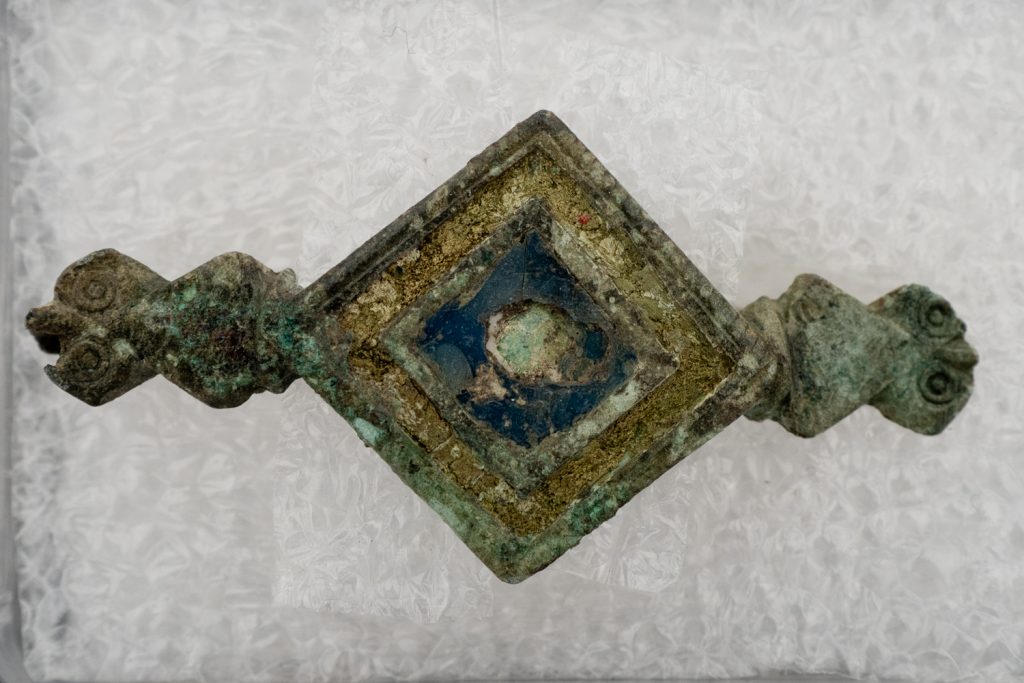
Roman copper brooch dated to the 2nd century AD. Photo: courtesy RWE/Headland Archaeology.
The Roman estate, which included a number of ancillary buildings, is believed to have been built in phases between the 1st and 3rd centuries C.E., the height of Roman rule in Britain. Archaeologists noted the remains of a Roman road leading to the villa as well as evidence of growing and processing crops and food on the site. In addition, they found the bones of dogs and cats, potentially for warding off pets.
Researchers also found a brooch, copper hair pins, nail cleaners, an inscribed silver ring, imported pottery, painted plaster, and window glass. Of particular interest were two bronze objects, the first the base of a chair leg shaped like a lion’s head, and the second an ornate door handle.
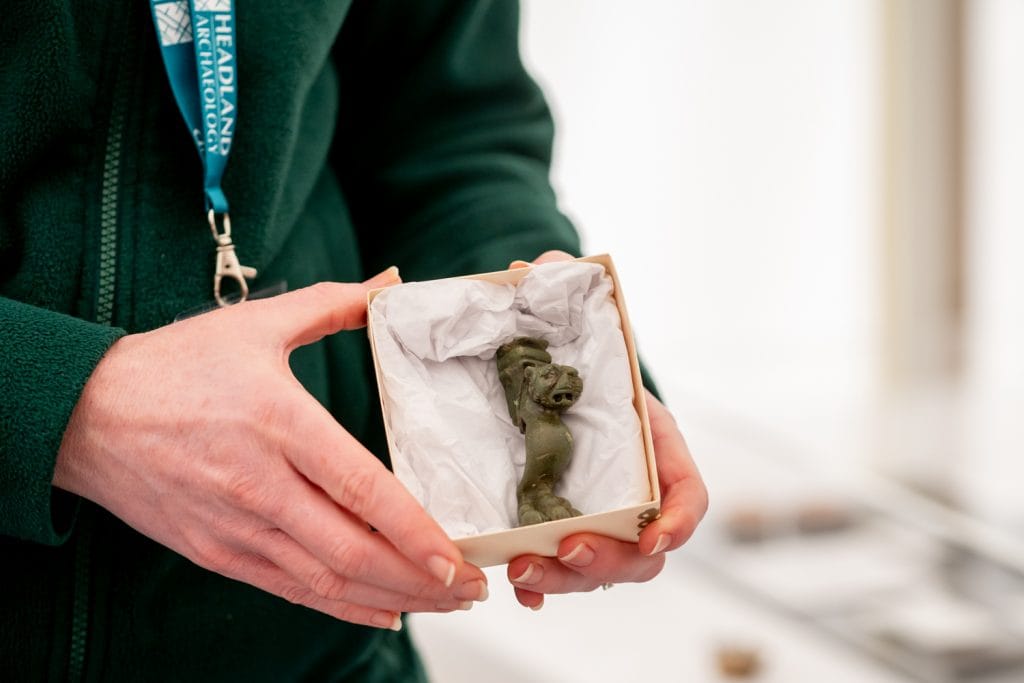
Bronze Roman Lion tripod foot that would have been the foot perhaps for a couch or other small furniture item. Photo: courtesy RWE/Headland Archaeology.
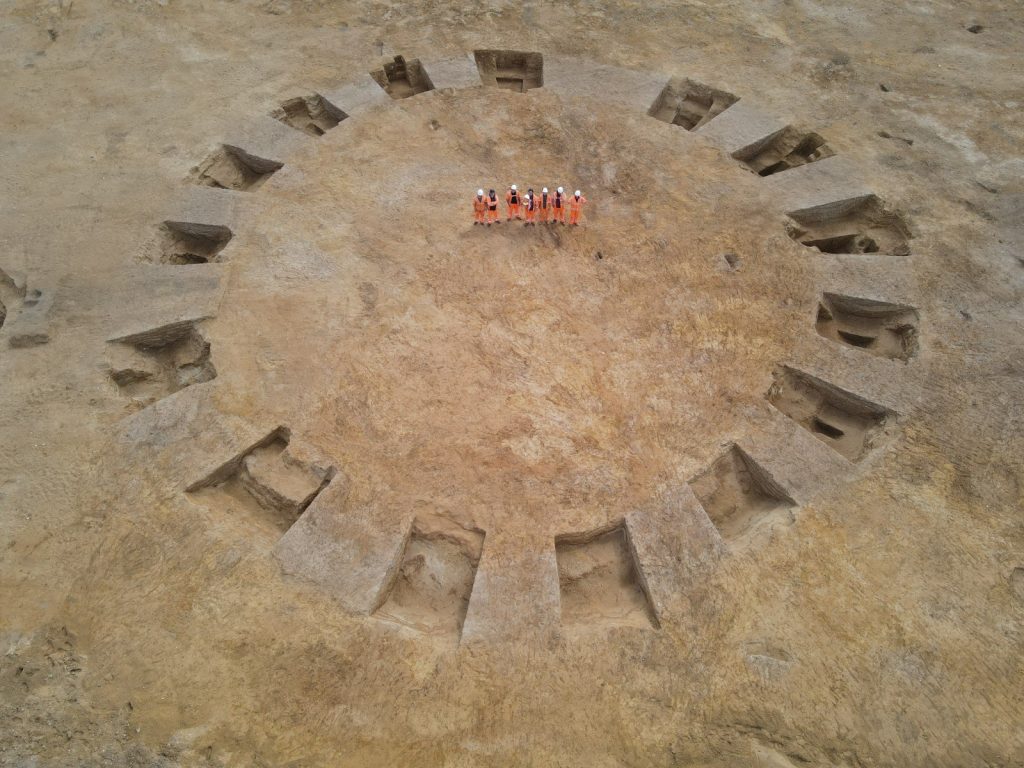
The survey, which assessed more than 1,850 acres along the 40-mile cable route and excavated more than 500 trenches, also uncovered a barrow mound and a 4,000 B.C.E. Neolithic pit, containing more than two pounds of pottery and stone tools. Archaeologists also located two lost medieval villages, Whimpwell and Stinton, that were recorded in the Domesday Book, the 11th-century royal survey of England.
Many of the findings were on display during a weekend-long presentation in late March in Gressenhall Farm and Workhouse, a museum near to where the Roman villa was discovered.
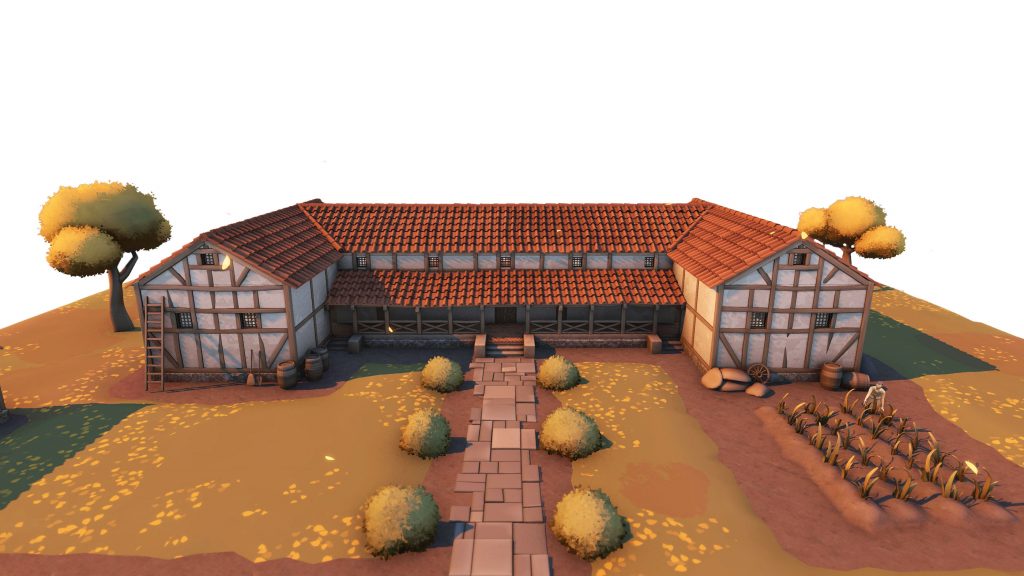
Artist’s impression of the Roman villa. Photo: courtesy RWE/Headland Archaeology.
“The archaeological campaign has revealed a remarkable story about how this landscape has changed over time, from prehistoric activity through to a Roman villa estate,” Job Darling, the project director for RWE, the multinational energy company, said in a statement. “Careful archaeological work sits alongside responsible infrastructure development, helping to protect and record Norfolk’s heritage while supporting the transition to renewable energy.”
Following data collection that included GPS mapping and 3D photogrammetry, the process of stitching together thousands of images, both the Roman villa and the Neolithic sites have been left in situ. Analysis of the years-long excavation project remains ongoing.

Related Articles
-