Museums & Institutions
Amid Censorship Outcry, Whitney Museum ‘Pauses’ Its Storied Independent Study Program
The museum also eliminated the associate director position, newly created in 2023 and occupied by Sara Nadal-Melsió.
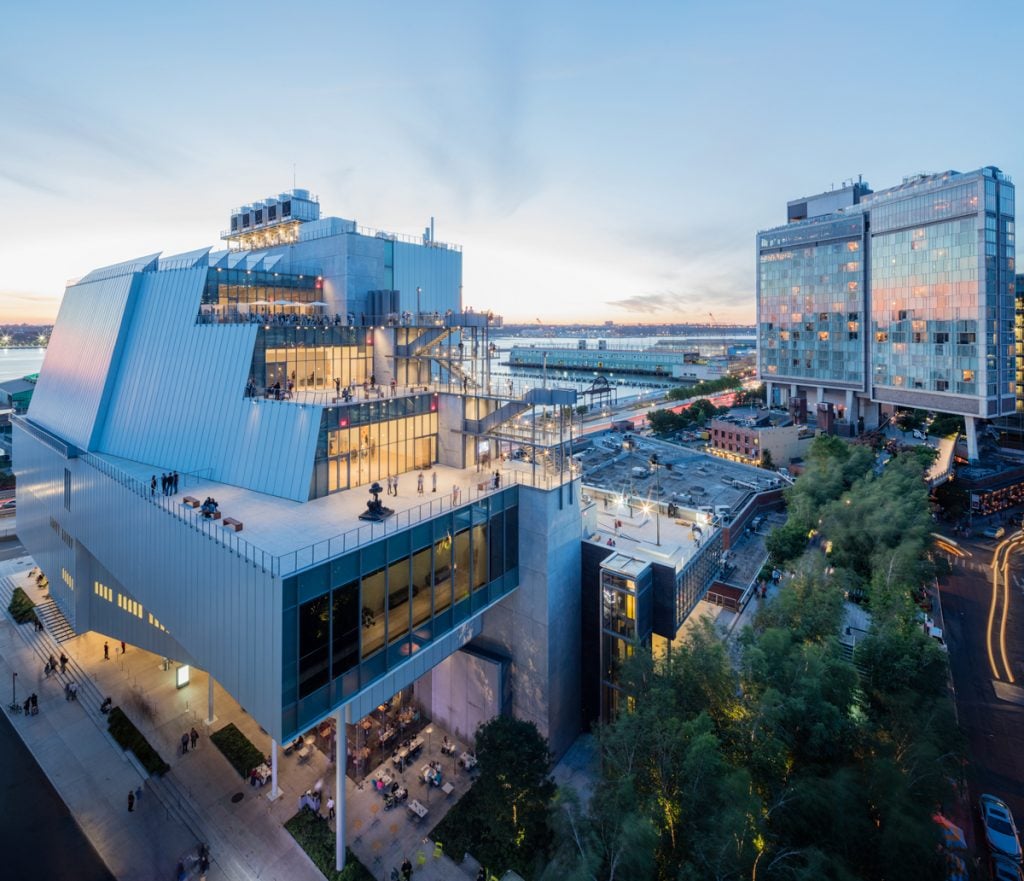
The museum also eliminated the associate director position, newly created in 2023 and occupied by Sara Nadal-Melsió.
Brian Boucher
 ShareShare This Article
Amid continuing outcry over the censorship of a performance at the Whitney Independent Study Program (ISP), the Whitney Museum of American Art, which hosts the ISP, has suspended the storied program for a year. Director Scott Rothkopf informed the ISP community of the suspension in an email on Monday morning, which was shared with Artnet News.
“After much consideration with colleagues and with a deep sense of responsibility to the program’s legacy and future,” wrote Rothkopf, “we have made the difficult decision to pause the ISP for the 2025–2026 academic year as we search for a new Director to lead the program forward.” Insiders had said for weeks that the museum had been sitting on admissions notifications for a new cohort of participants.
“The Whitney affirms its commitment to the ISP as a vital space for artists, curators, and scholars, and recognizes its tremendous importance to the broader field beyond its participants and faculty,” wrote Rothkopf.

Scott Rothkopf at the Whitney Gala in New York City. Photo by Ben Gabbe/Getty Images.
Ron Clark led the program from its 1968 inception to his retirement in 2023. Artist and writer Gregg Bordowitz was hired to lead the program in his place, but in February, he was demoted to director-at-large, leaving in charge Sara Nadal-Melsió, who had been hired in 2024 as the program’s first associate director.
But her position “will not be maintained,” the museum confirmed to Artnet News in an email.
Alumni of the program’s three cohorts, for artists, critics, and curators, include artists Jennifer Allora, Tony Cokes, Danielle Dean, Mark Dion, Andrea Fraser, LaToya Ruby Frazier, Felix Gonzalez-Torres, Renée Green, Jenny Holzer, Emily Jacir, Glenn Ligon, Rirkrit Tiravanija, and Julian Schnabel; critics and art historians Huey Copeland, Miwon Kwon, Pamela M. Lee, and Roberta Smith; and curators Carlos Basualdo, Naomi Beckwith, and Sheena Wagstaff, among many others.

The headquarters of the Whitney Independent Study Program. Photo: Max Touhey. Courtesy Whitney Museum of American Art.
Suspending the program comes amid widespread condemnation of the museum’s cancelation of a performance, No Aesthetic Outside My Freedom: Mourning, Militancy, and Performance, by artists Fadl Fakhouri, Noel Maghathe, and Fargo Tbakhi, that was to take place May 14. According to a statement from Tbakhi, “This event was to be grounded in the struggle for Palestinian freedom, while making space to mourn those who have been martyred in that struggle.”
Museum leadership canceled the performance after reviewing a video of a previous iteration of the performance, in a preamble to which Tbakhi makes a lengthy series of demands, including that those who support the concept of Israel or America leave the venue. The museum attributed the decision to its “zero-tolerance” policy for harassment or discriminatory behavior, adding that it considers it unacceptable to single out audience members based on their beliefs.

Sara Nadal-Melsió, the ISP’s first associate director. Photo: Max Touhey.
The curators of “A Grammar of Attention,” the exhibition that included the performance—Bea Ortega Botas, Kennedy Hollins Jones, Tamara Khasanova, and Ntshadi Mofokeng—released a statement saying they were “incensed” by the cancellation, and saying the three cohorts of program participants had “undergone an intense level of scrutiny” from the museum’s administration.
The museum’s move earned condemnation from free speech advocates. The National Coalition Against Censorship (NCAC) decried the cancelation in a May 28 statement, in which Elizabeth Larison, director of NCAC’s arts and culture advocacy program, wrote: “By communicating that it can (and will) censor artworks if it disagrees with how their artists engage and think about politics, the Whitney Museum, a private cultural institution, mirrors the authoritarian approach of our current presidential administration.” Artists at Risk Connection put out a May 29 statement saying that the cancelation “sets a deeply troubling precedent for how museums engage with political and socially-critical artists.”
The critical studies cohort canceled its May 18 capstone symposium in protest, saying that “the senior leadership at the Whitney Museum has abandoned its self-declared ‘Mission & Values,’ including ‘that we must be as experimental, responsive, and risk-taking as the artists with whom we collaborate,’ and ‘that we must lead with expertise, debate, self-reflection, and integrity.’”

Gregg Bordowitz, director-at-large at the Whitney Independent Study Program. Photo: Filip Wolak. Courtesy Whitney Museum of American Art.
Rothkopf’s letter from today makes no mention of this controversy, and does not mention Nadal-Melsió or the decision to eliminate her position.
Nadal-Melsió condemned the museum’s censoring of the performance in a May 19 statement. “It takes a lot of work and care to build a community, but only a moment of thoughtless violence to destroy, compromise, or instrumentalize it,” she wrote.
“For the past three weeks, all ISP capstone projects—traditionally culminating in two exhibitions and a critical studies Symposium—have been subjected to an unprecedented level of scrutiny from the senior administration at the Whitney Museum,” she wrote. “The announcement of the ISP capstone events on e-flux was cancelled, and the museum delayed the release of online content as long as possible to deny the shows normal visibility. Additionally, the admissions process for next year’s ISP cohort has also been halted by the museum administration until further notice.”

The Whitney Independent Study Program headquarters at the former Roy Lichtenstein home and studio. Photo: Max Touhey. Courtesy Whitney Museum of American Art.
A few hours after Rothkopf’s letter came a statement from more than 300 alumni, faculty, and other “friends of the program” in support the 2024–25 ISP cohort “who were censored when presenting work in solidarity with the struggle for Palestinian freedom.”
“The 2024–25 cohort of participants has publicly and collectively outlined their opposition to this act of censorship, including the financial and sociopolitical entanglements the board of the Whitney Museum holds in relation to this genocide,” said the group.
Activists and alumni organized a protest at the museum on May 23; in an Instagram post, they criticized museum board members, asserting that Nancy Carrington Crown belongs to a family that are major shareholders in General Dynamics, “a weapons manufacturer supplying bombs, shells, and munitions to the Israeli Occupation Forces.” They name Leonard A. Lauder as a member of the World Jewish Congress and the Jewish National Fund, which they call “two primary engines of the ongoing colonization, dispossession, and ethnic cleansing of Palestinian land.” And they note that Laurie M. Tisch is cousin to New York Police Department Commissioner Jessica Tisch, noting that the NYPD has cracked down on protests in solidarity with the Palestinian cause.
The museum did not immediately respond to a request for comment on Strike MoMA’s assertions.

The Whitney Independent Study Program headquarters at the former Roy Lichtenstein home and studio. Photo: Max Touhey. Courtesy Whitney Museum of American Art.
The “friends of the ISP” letter ties the “atmosphere of censorship” at the museum to “a broader political climate of fear and intimidation in the United States,” saying that it follows “other recent crackdowns on free expression, protest, and speech by artists and scholars supporting Palestine.”
Among the signatories are American Artist, Hannah Black, Candice Breitz, Benjamin H.D. Buchloh, Judith Butler, Mark Dion, Andrea Fraser, K8 Hardy, Alfredo Jaar, Emily Jacir, Louise Lawler, Park McArthur, Mai-Thu Perret, Walid Raad, Dread Scott, A. L. Steiner, Kerry Tribe, and Oscar Tuazon.
Despite the suspension, Rothkopf’s letter professes a growing commitment to the ISP, which had occupied various rented spaces throughout the city over the years since its 1968 founding but moved recently to Roy Lichtenstein’s former home and studio on Washington Street, just a few blocks south of the museum. His wife Dorothy Lichtenstein donated the 11,000-square-foot facility in 2023, and the move, said Rothkopf, signals the museum’s “deep investment” in the program. He touted that the museum grew the staff, removed admissions fees, and provides stipends to all participants.
“With this level of change, we have learned that greater reflection regarding the ISP’s new circumstances and future is necessary,” wrote Rothkopf. “In addition, recent developments have underscored the need to further consider the nature of the relationship between the program and the Museum of which it is a part.
“Today, the program is without a Director,” he wrote. “This leadership gap has strained both the strategic vision and day-to-day operations of the program. We respect the enormous commitment participants make when joining the ISP. All participants deserve to enter a program supported by strong leadership, direction, and stability.”