People
What’s Next for Former MoMA Director Glenn Lowry?
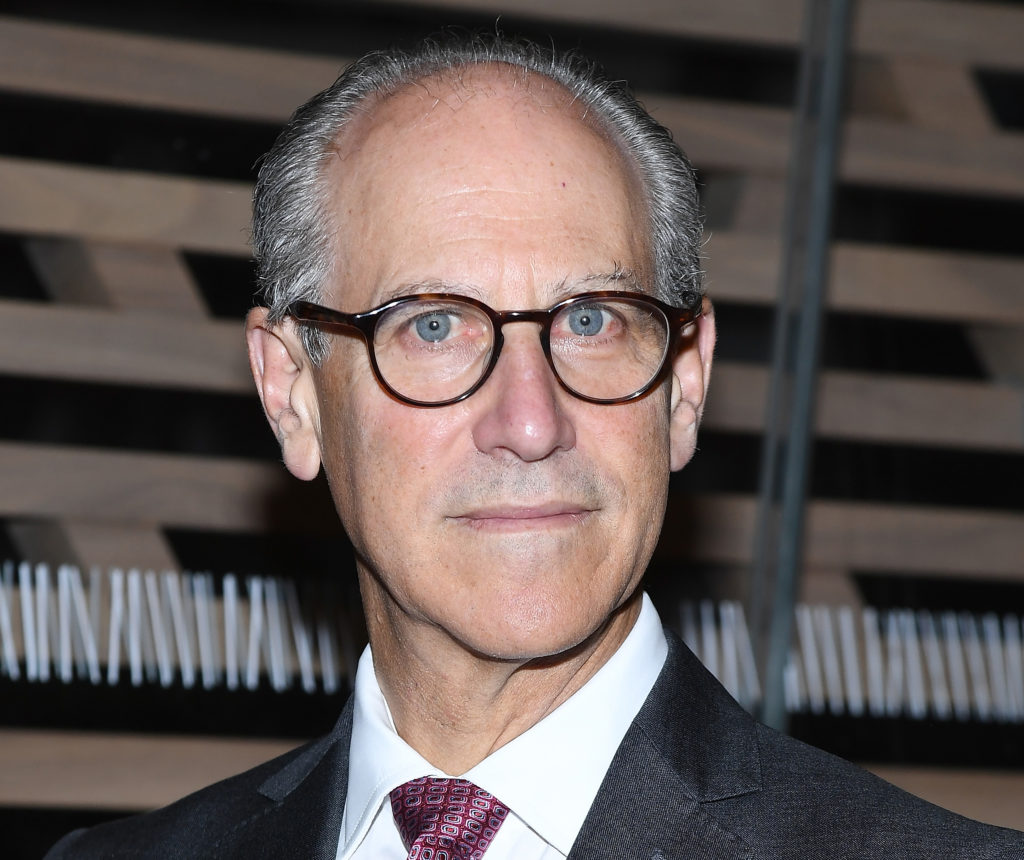
After 30 years at one of New York's most storied institutions, Lowry is looking toward new opportunities in Paris and the Middle East.
After 30 years at one of New York's most storied institutions, Lowry is looking toward new opportunities in Paris and the Middle East.
Sarah Cascone
 ShareShare This Article
Glenn Lowry’s three-decade reign at New York’s Museum of Modern Art has come to an end. The longtime director stepped down in September after shepherding one of the most powerful cultural institutions in the world through two sweeping expansions and a merger with PS1 in Queens, all while growing the museum’s endowment nearly tenfold, from $200 million to $1.7 billion.
Lowry, who is 71, would have retired earlier, but “I was having so much fun,” he told journalist Charlotte Burns on the most recent episode of the podcast The Art World: What If…?! that she hosts with Allan Schwartzman. Their conversation ranged from how it felt to finally realize the vision for the museum Lowry had when he took the job back in 1995, the challenges facing museums today, and what he will miss most—like his favorite work in the collection, Jack Whitten’s Atopolis for Édouard Glissant (2014)—as he heads into the next chapter.
“I worry nonstop that museums writ large are very fragile institutions that require a lot of care and nurturing to sustain,” Lowry admitted.
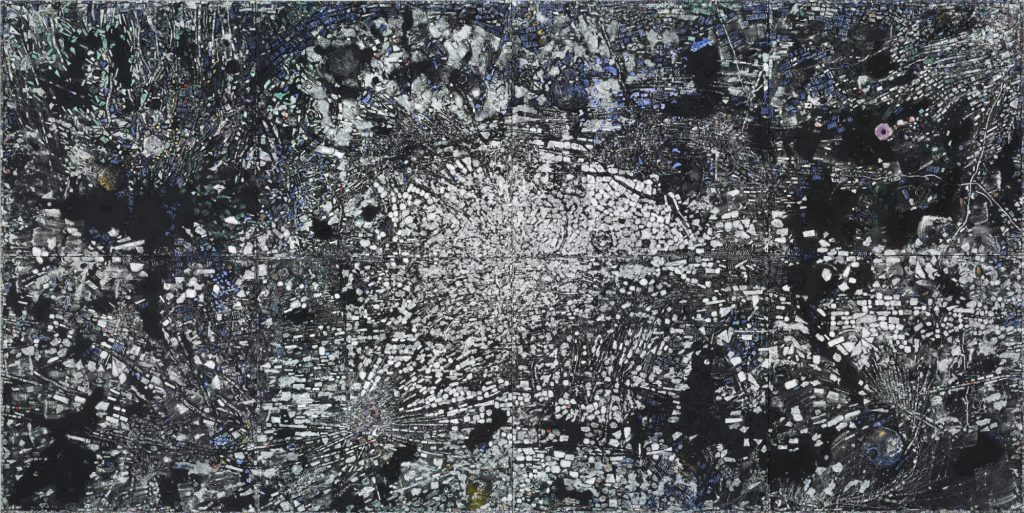
Jack Whitten, Atopolis for Édouard Glissant (2014). Collection of the Museum of Modern Art, New York. Acquired through the generosity of Sid R. Bass, Lonti Ebers, Agnes Gund, Henry and Marie-Josée Kravis, Jerry Speyer and Katherine Farley, and Daniel and Brett Sundheim. Photo: Jonathan Muzikar, ©2025 the Museum of Modern Art, New York.
He also spoke about the fear that nonprofit museums could lose their tax-exempt status in the U.S. under the current Trump Administration, the need for institutions to be flexible in the face of unforeseen crises, and how to respond appropriately to scandals, particularly when to comes to board members. (“That’s why you have a strong board that can talk difficult, contentious, contradictory, disturbing issues through and arrive at a thoughtful and measured response.”)
So what’s next for Lowry? He spoke in the interview of a couple of gigs on the horizon. He’ll be working as an advisor to the Islamic Arts Biennale in Jeddah, Saudi Arabia, and the Kiran Nadar Museum of Art in Delhi.
“I’m very interested in the Middle East. It’s a part of the world that I started my career in,” Lowry said, nodding to his early work as curator of Oriental art at the Rhode Island School of Design and curator of Near Eastern art at the Smithsonian Institution’s Arthur M. Sackler Gallery and Freer Gallery of Art in the 1980s. “It’s amazing what’s going on there. The population isn’t as dense, but when you think about fascinating cultural activity, there’s an enormous amount there. It’s a very different system, patronized in a very different way, and realized in a very different way, but very ambitious in the same way that culture in [the U.S.] was very ambitious 100 years ago.”
He’s also in talks with the Art Bridges Foundation about working on a new leadership campaign for museum directors. Starting in November, Lowry will give a series of lectures titled “I Want a Museum. I Need a Museum. I Imagine a Museum” at the Louvre in Paris, encouraging the art world to rethink what a museum can be in the 21st century.
“There are lots of things that are keeping me engaged in the field,” Lowry said. He noted that the resurgence of Paris as a cultural center in the last decade “is nothing short of extraordinary.” While the city has “tremendous” historic cultural links, Lowry said they is now an “efflorescence” of new and different cultural spaces and a revival of cultural energy.
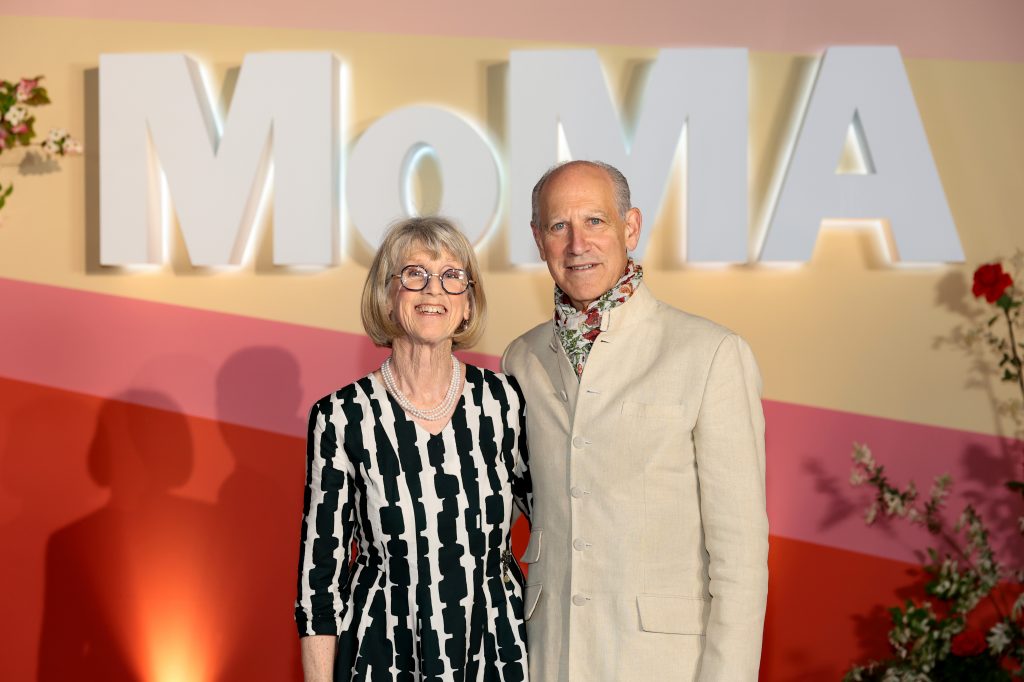
Susan Lowry and Glenn D. Lowry attend MoMA’s Party in the Garden 2025 at Museum of Modern Art, New York City. Photo: by Dimitrios Kambouris/Getty Images for MoMA.
With his retirement, Lowry has handed the reins to Christophe Cherix, the museum’s chief curator of drawings and prints—one of several major New York museums to hire new leadership from within.
At the Whitney Museum of American Art, Scott Rothkopf was promoted after the resignation of Adam Weinberg in November 2023.Mariët Westermann succeeded Richard Armstrong last June at the Guggenheim. Over at the Frick Collection, Axel Rüger stepped up to the top post just in time for the March unveiling of the expansion shepherded by Ian Wardropper. And just last week, Lisa Phillips announced her pending retirement from the New Museum, also on the verge of a major expansion.
“It’s a seriously interesting moment to be directing a museum,” Lowry said. “You have to have, I think, a really positive attitude.… Your responsibility is to look at all these problems, assess the ones that are impacting you, and then navigate your way through them.”