Law & Politics
South Africa Drops Out of Venice Biennale Following Legal Uproar
The announcement comes after a court dismissed artist Gabrielle Goliath’s attempt to have her canceled project reinstated.

The announcement comes after a court dismissed artist Gabrielle Goliath’s attempt to have her canceled project reinstated.
Jo Lawson-Tancred
 ShareShare This Article
South Africa will not host a pavilion at this year’s Venice Biennale, the culture ministry confirmed on Friday. The fate of the pavilion had been in limbo since the start of January after the culture minister abruptly canceled the planned exhibition due to concerns over an artwork that included references to Gaza.
The announcement comes just two days after ousted artist Gabrielle Goliath’s attempt to overturn the South African government’s cancellation of her pavilion failed, after a high court judge dismissed her urgent application just hours before the biennial’s submission deadline.
Goliath and curator Ingrid Masondo had argued that South African culture minister Gayton McKenzie overstepped his authority when he cancelled the proposed pavilion exhibition, Elegy, after it was selected by the nonprofit Art Periodic. Their urgent application contended that the minister had no contractual right to veto the appointment and that his decision infringed on Goliath’s constitutional right to freedom of expression.
McKenzie, who described the project as “divisive” when he canceled the exhibition on January 2, maintained that his department had been misled about the nature of the proposal and terminated its contract with Art Periodic.
North Gauteng High Court’s Judge Mamokolo Kubushi did not give a reason for her decision and awarded costs to the respondents, which included the minister.
Goliath’s team said they were “profoundly disappointed” by the ruling and that it was “a shock” that they had been ordered to pay costs of the respondents’ application, including costs of a senior and junior counsel, which they claimed are “punitive measures.”
“We believe this ruling sets a dangerous precedent, jeopardizing the rights of artists, curators, and creatives in South Africa to freedom of expression—freedom to dissent,” they said, adding that they will contest this ruling through an appeal.
The judgement follows a hearing in South Africa’s high court on February 11 of Goliath’s application to be reinstated as the country’s artist for the 61st Venice Biennale, which opens in May.
At the hearing, Goliath argued for the chance to exhibit her ongoing performance piece Elegy, which commemorates the unjust killing of various groups, including women and queer people in South Africa, and victims of atrocities like the Herero and Nama genocide of the early 1900s. She had been preparing to present a new iteration in Venice, curated by Masondo, that would honor Hiba Abu Nada, a Palestinian poet who was killed by an Israeli airstrike in October 2023.
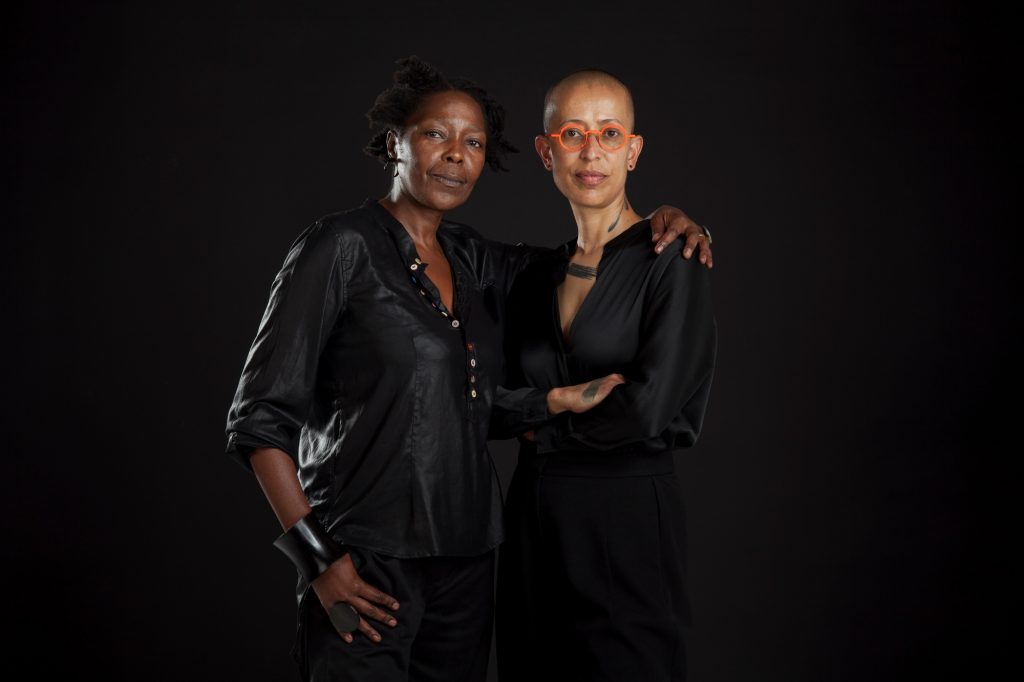
Gabrielle Goliath and Ingrid Masondo. Photo: Zunis.
Representing Goliath at the hearing, advocate Adila Hassim SC argued that McKenzie did not have a right to veto the South Africa pavilion.
McKenzie’s legal representative, advocate Zinzile Matabese SC, had claimed the cancelation was not about constitutional rights such as freedom of expression, but merely about contractual law. When pressed by Judge Kubushi to identify the source of the culture minister’s alleged veto power, his counsel struggled to produce contractual evidence granting him authority over the pavilion’s artistic content, according to a report in the South African outlet Daily Maverick.
Matabese argued instead that McKenzie had been “deceived” about the nature of Goliath’s proposal by Art Periodic, the non-profit tasked with selecting South Africa’s artist for the Venice Biennale. McKenzie terminated the culture ministry’s contract with the non-profit after this “breakdown of trust.”
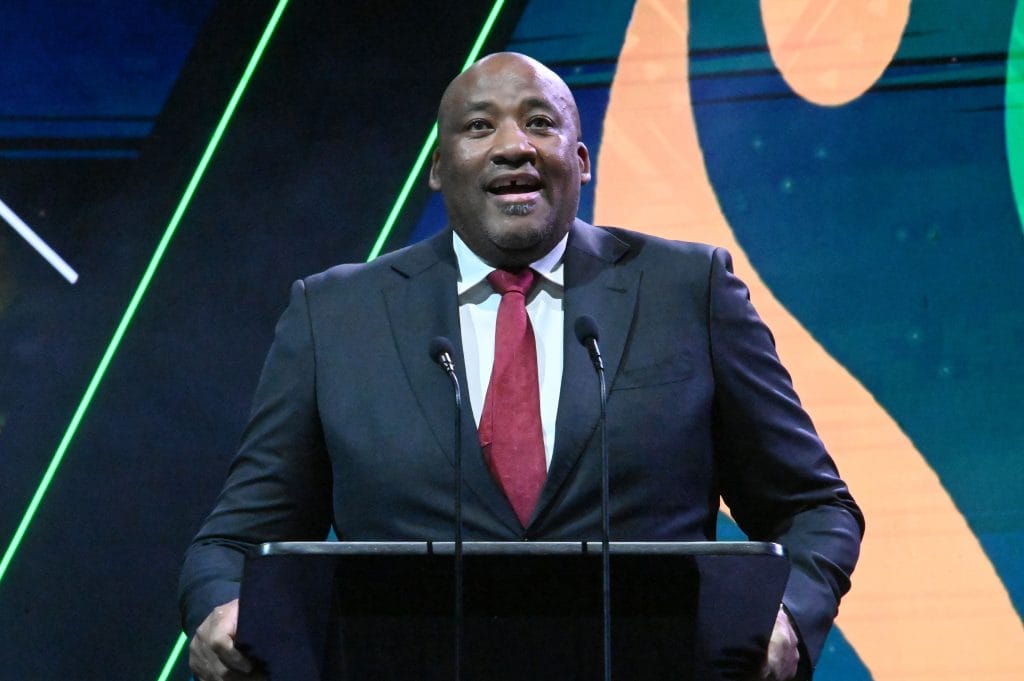
South African culture minister Gayton McKenzie. Photo: Oupa Bopape/Gallo Images via Getty Images.
The minister has also been accused by Daily Maverick of “making surreptitious moves” to delay action until the Biennale’s deadlines had passed, forcing a situation in which it is too late for South Africa to participate this year. Though there had been rumors that his department was planning an alternative submission, his spokesperson Stacey-Lee Khojane insisted that the ministry was “not planning any exhibition in Venice this year.”
Khojane did not immediately respond to a request for comment after the court’s decision.
McKenzie was slow to respond to Goliath’s legal application, filed on January 22. In an affidavit McKenzie filed on February 9, and reviewed by Artnet News, he challenged the urgency of the matter, describing it as “self-created” on the part of the applicants.
In an affidavit filed by Goliath in response, she suggested that McKenzie had “deliberately” delayed his response in hopes of missing the Biennale’s deadlines, so “render[ing] the application moot.”
Her filing also revealed that South Africa’s ambassador to Italy, Nosipho Jezile, had arranged for the Biennale to extend its deadline for the submission of catalogue materials from February 6 until February 13. The artist and her team submitted these materials on time.
This story was originally published on February 18 about the high court’s decision. It was updated on February 20 at 11:00 a.m. ET to reflect the culture ministry’s confirmation that South Africa would not participate in the Venice Biennale.