Art World
Sale of Robert Rauschenberg’s Captiva Compound to Developers Ignites Backlash
The sale 'constitutes a monumental betrayal' says the local Captiva Civic Association.
The sale 'constitutes a monumental betrayal' says the local Captiva Civic Association.
Richard Whiddington
 ShareShare This Article
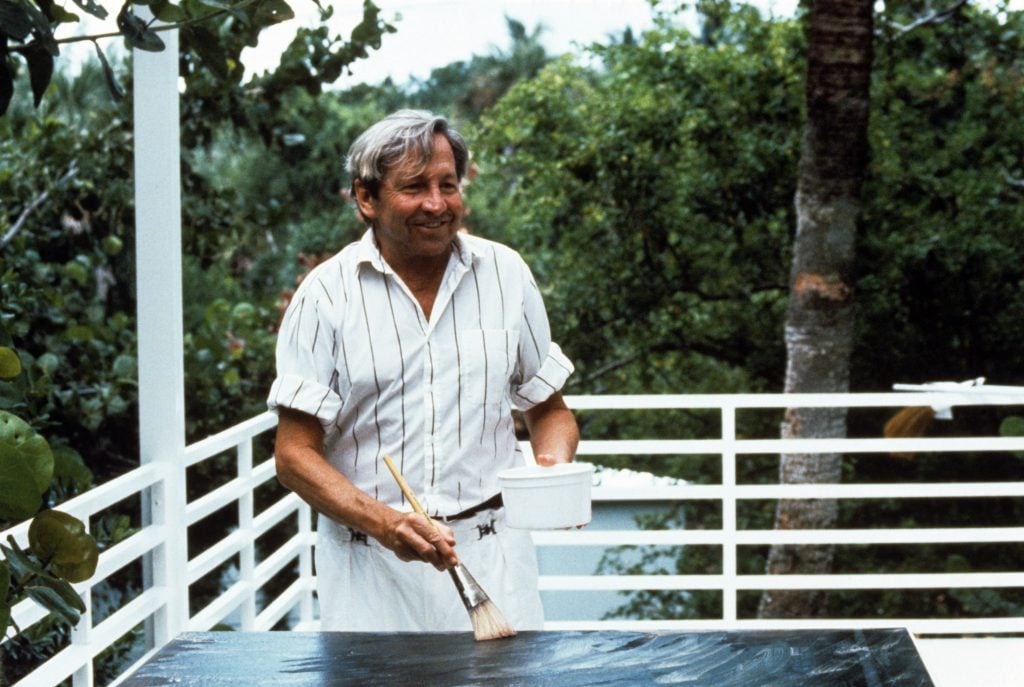
The 22-acre property on Captiva Island, southwestern Florida, where Robert Rauschenberg spent the later decades of his life sold for $45 million to South Seas, a resort that already owns more than 300 acres of land on the island. The purchase has enraged locals who believe it threatens the island’s sustainability and runs contrary to the American artist’s ethos.
The property, whose prime stretch of beach-front land includes Rauschenberg’s first house on Captiva as well as an art studio and several cottages, was sold by the New York-based Robert Rauschenberg Foundation, which has owned and operated the site since the artist’s death in 2008.
When the Foundation announced its decision to sell the Captiva property last August, it cited the findings of a multi-year study that showed safeguarding the estate against future environmental risks (namely: hurricanes, shoreline erosion, and rising sea levels) would require “substantial additional investment and site modifications,” ventures the Foundation said it could not afford. The Rauschenberg Residency, which since 2012 has brought more than 500 creatives to the island, will end.

Aerial view of Captiva Island in the Gulf of Mexico. Photo: Getty Images
Following the announcement, Captiva locals voiced their hope of protecting the land from being developed. There is little public space on the island and one proposal, released in October last year, was for the Captiva Island Fire District to purchase a little under 10 acres with a local investor purchasing the remaining properties. Both parties agreed to preserve and not rezone the property. The fear, one expressed by the Sanibel-Captiva Conservation Foundation (SCCF), was that new development on island would not only threaten the fragile environment, but also make evacuation during a climate emergency more difficult. Residents were forced to evacuate Captiva Island during Hurricane Milton in October 2024.

Florida, Captiva Island, Gulf of Mexico beach. Photo: Getty Images.
With hope of a more preservation-minded buyer dashed, the Captiva Civic Association (CCA) expressed its strong disappointment.
“The sale of Rauschenberg property to South Seas constitutes a monumental betrayal by the Rauschenberg Foundation of the Captiva community that Bob Rauschenberg loved and personally sought to protect from overdevelopment,” Lisa Riordan, president of CCA, said over email. “We hope the thousands of artists associated with Bob Rauschenberg and the Foundation can come to understand the extent to which the Foundation has failed the island community of Captiva and the legacy of Bob Rauschenberg.”
For the past three years, the CCA, together with a host of local partners, has been fighting the efforts of South Seas to increase density and building heights on the island. According to CCA, there are currently several pending lawsuits aiming to prevent overdevelopment on Captiva.
On Sanibel & Captiva Island, a Facebook group with more than 200,000 followers, the reception was largely one of dismay, with one user noting that the South Seas development could potentially “over crowd and ruin the area.”

Rauschenberg and Cy Twombly discussing a work (Cloister) in Rauschenberg’s Laika Lane studio, Captiva, Florida, 1980. Photo: Terry Van Brunt, Courtesy Robert Rauschenberg Foundation.
South Seas, whose existing resort is adjacent to the Rauschenberg property, is yet to release its development plans, but sought to address local opposition in its press release. “We look forward to honoring the legacy of this amazing artist,” the resort’s president Greg Spencer said in a statement. “Through future art-related programming and by incorporating several buildings from the property into our resort.” Precisely what this “honoring” might look like remains unclear. South Seas did not respond to requests for comment.
In response to questions surrounding the concerns of Captiva locals, the Rauschenberg Foundation directed attention to its August 2025 statement that noted “a responsibility to allocate its resources in ways that sustain a wide range of mission-driven programs.”
A Texas native, Rauschenberg moved to Captiva in 1970 and became a beloved community member, safeguarding land from development, donating art for local charity auctions, and even helping island elders pay rent. In a letter describing his discovery of Captiva, Rauschenberg wrote: “I felt a magic that was unexplainable in its power. Captiva is the foundation of my life and my work; it is my source and reserve of my energies.” One wonders what he would think now.