Archaeology & History
What Did Pompeii Smell Like? A New Study Analyzes Its Ancient Incense
It's the first time that ritual ash from the site has been tested.
by
Vittoria Benzine
 Share This Article
When Mount Vesuvius erupted in 79 C.E., volcanic ash immortalized lavish frescoes and puzzling clothing left over from everyday life in Pompeii. Sometimes even ash itself—from altars or censers—was preserved. Five international researchers examined such remnants for the first time recently. Their results, published this week in Antiquity, document the first ritual residue from Pompeii ever tested, lending newfound physicality to an area of study formerly limited to texts and illustrations.
The team tested two vessels surfaced on separate, previous occasions. The first, Censer one, is an “incense cup” found in 1954 at the Officina di Sabbatino, “a building converted from a residence into an inn around the mid-1st century,” per the study. Roman construction sites often worked with the gods.
Censer two, meanwhile, is a “hemispherical bowl” that turned up in 1986 amidst the furnished domestic shrine of a farmhouse in Boscoreate, two miles northwest of Pompeii. This vessel features three full and partial female forms, indicating that it served in rites commemorating the dead.
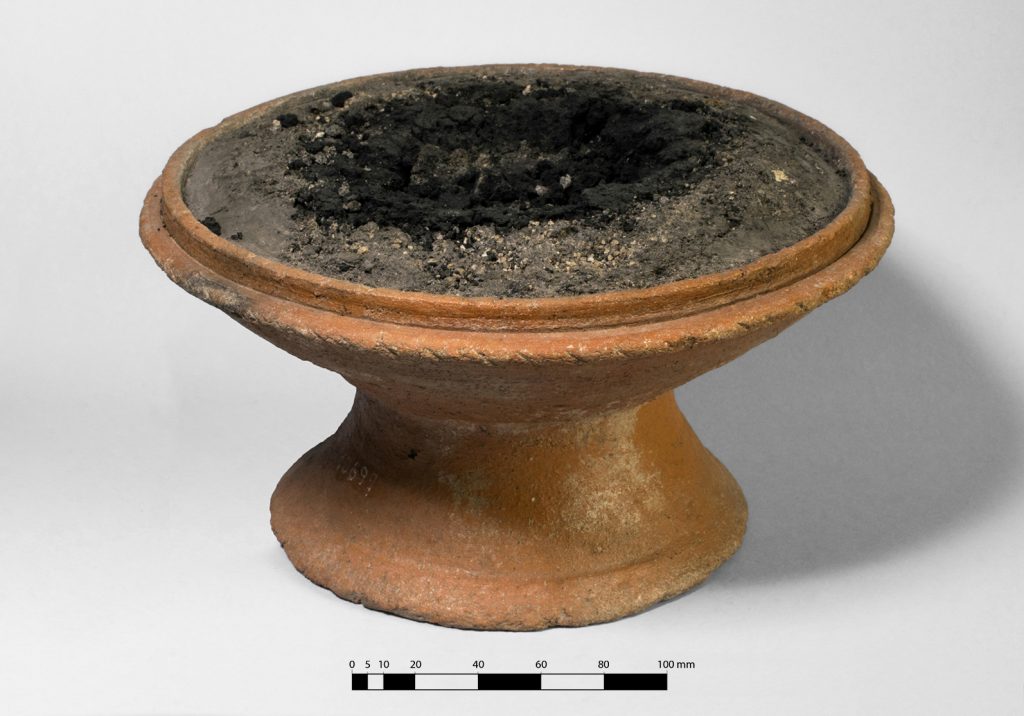
Censer 1. Photo by J. Eber, courtesy of the Archaeological Park of Pompeii
The magic here, however, is happening inside these vessels. Researchers have only ever found a handful of actual ash specimens throughout the ruins of Pompeii. Excavation reports from the 18th, 19th, and 20th centuries include several mentions of residues found on altars and in incense burners. “None of these samples were scientifically analyzed, and no material has survived,” the study noted, though.
Thus, the team collected minimally invasive samples from the rim and center of both Censer one and two—digging just a bit below the surface to minimize risk of contamination, especially since the team couldn’t go back and take the control specimens they were missing from the soil surrounding these relics. Next, they processed and separated those samples, using sieves, a centrifuge, solvents, and more.
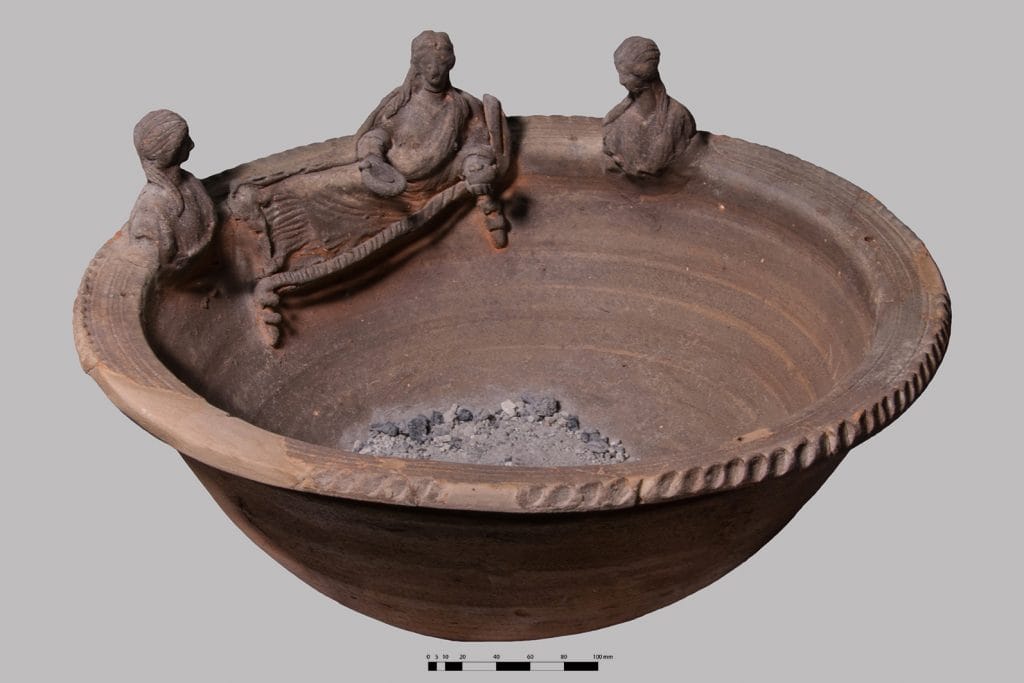
Censer 2. Photo by J. Eber, courtesy of the Archaeological Park of Pompeii
The “pebble-like, charcoal rich” contents of Censer 1 contained charred bits of “woody plants” like oak (for the Roman god Jupiter) and laurel (honoring the god Apollo).
The “fine” and “ashy” contents of Censer two had such plants too—as well as material hailing from grapes. That part points to perhaps vinegar or wine. Romans would commonly pair the latter with frankincense—potential bits of which also appeared here—in a ritual called the prafaetio, a kind of preface. Practitioners would traditionally don a toga, then invoke their gods.
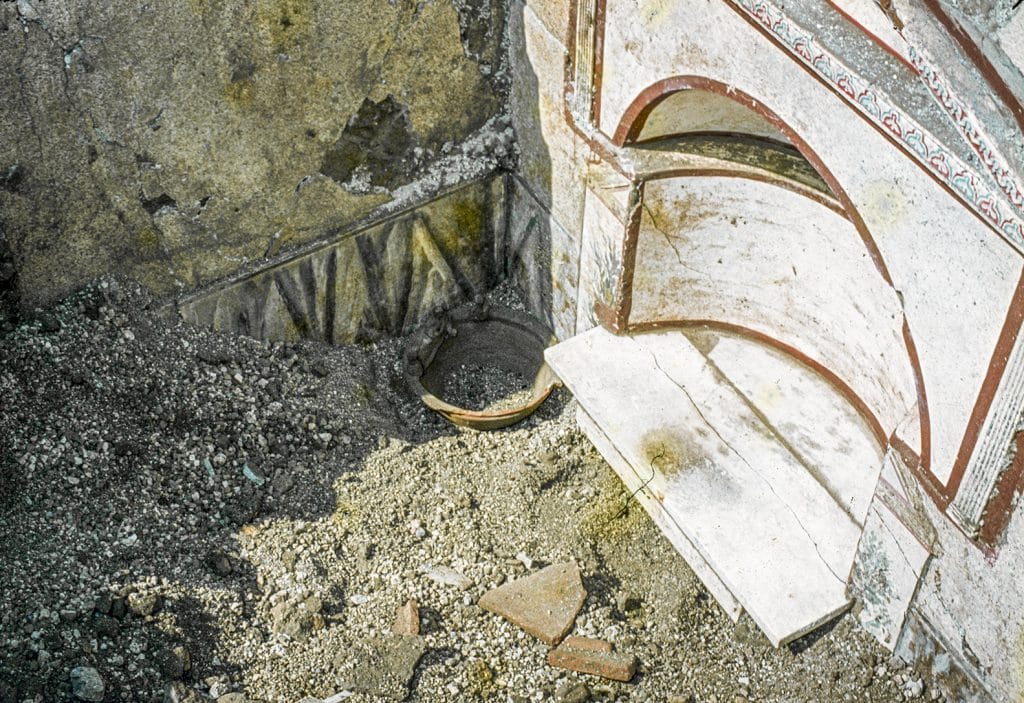
Censer 2 in situ in the domestic shrine at Boscoreale. Photo courtesy of the Archaeological Park of Pompeii
Frankincense comes from the sap of Boswellia trees, which abound from east Africa and the bottom of the Arabian Peninsula all the way to India—where this frankincense seems to hail from. The University of Zurich’s Johannes Eber, who led this study, called this surprising element of the team’s results “a sign of Pompeii’s extensive trade connections.” By mapping Pompeii’s “smellscapes” in greater detail, the find contributes to the rising discipline of sensory archaeology, too.

Related Articles
-