Art World
New UCCA CEO Kong Lingyi on the Beijing Institution’s Future
'Operations must serve content, not the reverse,' she says. 'Once content is weakened, everything else follows.'

'Operations must serve content, not the reverse,' she says. 'Once content is weakened, everything else follows.'
Cathy Fan
 ShareShare This Article
This Q&A is part of The Asia Pivot, Artnet Pro’s biweekly members-only newsletter that provides mission-critical analysis, insights, and exclusive intelligence on developments in Asia’s art markets, with a focus on business opportunities and challenges. Subscribe here to receive it directly to your inbox every other week.
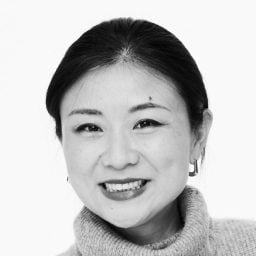
Shortly before the Lunar New Year, Philip Tinari stepped down from his role as director and CEO of the UCCA Center for Contemporary Art in Beijing. Simultaneously, the institution introduced a new leadership structure, appointing Kong Lingyi as its CEO. For many observers, this transition signaled a new chapter for an institution that has played a significant role in shaping China’s contemporary art landscape over the past two decades.
Since joining UCCA in 2012, Kong has been a key figure in guiding the institution’s development, overseeing its brand strategy, public communications, and audience-engagement systems. She most recently served as the institution’s vice president of brand, prior to Tinari’s departure. In a wide-ranging interview, she shared her vision for the institution, which also has branches in Beidaihe and Yixing.
You worked at UCCA for many years. What does this shift in responsibility mean for you? What are the priorities for today’s UCCA?
For me, it primarily means taking on greater responsibility. UCCA is not only a public platform for art education, but also one of the narrators of China’s contemporary art history. Running such an institution requires constant judgment on operations, and also involves making long-term decisions. This necessitates a shift in perspective: from an executor focused on specific tasks to a manager responsible for sustainable development. The question is no longer just how to deliver a strong exhibition today, but how to ensure UCCA remains healthy and on the right path in the next few years.
Our mission—to bring the best in art to a wider audience—remains unchanged. Going forward, we will place greater emphasis on public education and accessibility, aligning more closely with the needs of the present. Our immediate priorities are twofold: first, team stability and clarity of direction; second, the smooth delivery of upcoming exhibitions and programs. From late last year into early this year, we have announced new exhibitions across branches in Beijing, Beidaihe, and Yixing for 2026, and we are committed to executing them well. Content is the foundation of institutional credibility. Operations must serve content, not the reverse—once content is weakened, everything else follows.

Installation view of Yang Fudong: Fragrant River, UCCA Center for Contemporary Art, 2025. Photograph by Yang Hao. Courtesy UCCA Center for Contemporary Art.
How would you assess UCCA’s development over the past decade? And what are your priorities for its next phase in the coming years?
The institution has been around for almost 20 years since its founding in 2007, and renewal is inevitable. What defined its previous phase, in my view, is that it secured a real position internationally, not only through the scale or visibility of its programs, but as an institution taken seriously by its peers. Many outstanding individuals have come through UCCA and gone on to shape the broader global art world.
I hope UCCA will be supported by solid resources that enable innovation, connect diverse communities through an open approach, and give back to society with a strong sense of public responsibility, becoming an indispensable public force within China’s contemporary art ecosystem.
Ahead of Art Basel Hong Kong, UCCA announced a new space in Guangzhou in collaboration with OneM Contemporary Art Center, set to open in 2027. You were also in Hong Kong during the art week. In light of these developments, what new observations or deeper insights do you have about the Asian art ecosystem?
One clear development is the growing vitality of China’s contemporary art scene. The increasing number of institutions and galleries, particularly recent projects in Guangzhou and Shenzhen, reflects a deeper structural shift.
At the same time, the forces shaping the field have become more diverse. UCCA OneM is one example, but only one among many. Our partners in Yixing and Aranya, as well as a wave of new institutions in the Greater Bay Area driven by technology companies, all come from different backgrounds and operate under different logics. Yet they share a common direction: bringing contemporary art into places where such ecosystems did not previously exist.
The collector base is evolving in parallel. More new collectors are entering, bringing varied backgrounds, perspectives, and motivations. This momentum is positive, even if it introduces a degree of uncertainty.
Hong Kong remains a crucial vantage point. Here, one can observe how mainland institutions’ international ambitions are increasingly interacting with Hong Kong’s role as a mature platform for exchange and dialogue.

UCCA Clay in Yixing. Courtesy UCCA Center for Contemporary Art.
Is contemporary Asian art developing a distinct “Asian sensibility” or “Asian voice?” What is still missing in the current ecosystem? And what is the biggest misconception the Western art world has about Asia?
Compared to Europe and the U.S., public investment in art education across much of Asia remains limited. Independent, professional foundations with long-term vision are still underdeveloped. While corporate collecting is growing rapidly, it often lacks curatorial depth and a commitment to public engagement.
I remain cautious about the idea of “Asian sensibility.” The question is not without meaning, but it is unclear whether we are forming a shared voice or simply operating within shared rules. An “Asian voice” may be emerging, but it must be open and polyphonic, allowing for internal differences, given the region’s diverse cultural, religious, and historical contexts.
For Asian contemporary art to establish a strong and distinct global position will take time. This requires strengthening key areas, including the mid-tier market, regional collaboration, public education, and experimental platforms. Encouragingly, this “unfinished” state is itself evolving, and its openness may be its greatest strength.