Art History
Gustav Klimt’s Path to the $150 Million Club
A look at the market forces that propelled an Austrian Secessionist into the art market’s top tier.

A look at the market forces that propelled an Austrian Secessionist into the art market’s top tier.
Eileen Kinsella
 ShareShare This Article
It has been nearly 20 years since top collector and Neue Galerie cofounder Ronald Lauder paid $135 million for Gustav Klimt’s shimmering gold Portrait of Adele Bloch-Bauer I (1907) in a private transaction. The price stunned the art world, largely because at that time only one other known artwork—Picasso’s Boy With a Pipe (1905)—was confirmed as being in the “$100 million club.”
Now, a blockbuster Klimt consignment from the estate of Ronald’s late brother, fellow world-class collector and philanthropist Leonard Lauder (1933-2025) is poised to recalibrate the Klimt market yet again.
That’s because Sotheby’s, which is handling the Lauder collection, is offering another major work, Portrait of Elisabeth Lederer (1914-1916), with an asking price in excess of $150 million.
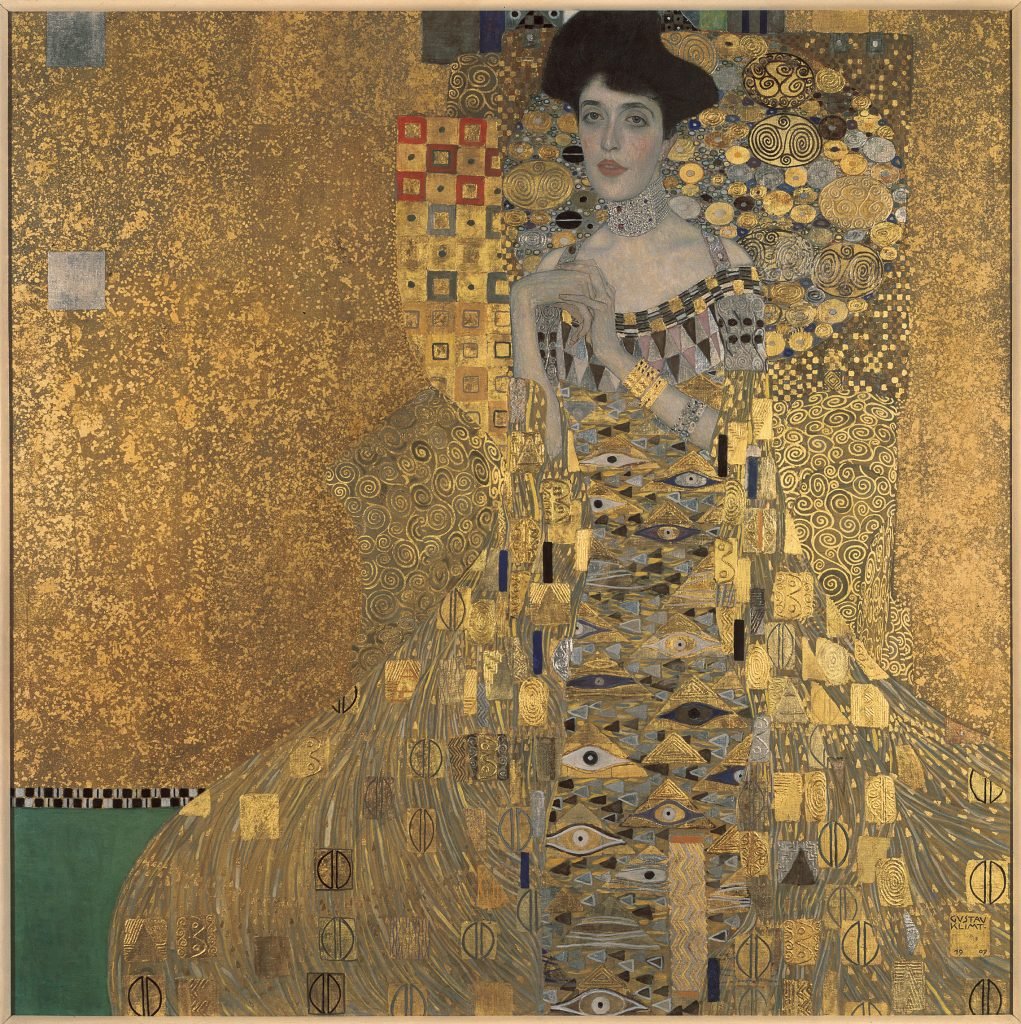
Gustav Klimt, Portrait of Adele Bloch-Bauer I (1907). Collection of the Neue Galerie.
And because Sotheby’s is backing the work directly, it is guaranteed not only to sell, but to set a new auction record that will dwarf the current $108.8 million price set at its London saleroom in 2023, for Lady With a Fan (1917-18). Klimt’s second-highest price at auction is $104 million, achieved for Birch Forest (1903), sold from the Paul Allen collection at Christie’s in 2022.
That means there will soon be a roughly $42 million, or 39 percent spike, in the top Klimt auction price in the space of just two years. Which is not to mention that the Leonard Lauder consignment also contains two shimmering Attersee landscapes, with estimates at over $70 million and $80 million respectively, putting the Klimt market in sharp focus this season, and positioning it to pull in over $300 million on three lots alone.
“This is a really big moment in the Klimt market,” said Helena Newman, chairman of Sotheby’s Europe and chairman of Impressionist and modern art worldwide. She pointed out that the artist completed only five commissioned portraits between 1912 and his death, in 1918. “They’re basically all in museums. This is probably one of the last chances to buy something like this by Klimt.”

Installation view of the special exhibition “Klimt and the Women of Vienna’s Golden Age, 1900-1918.” Image courtesy Neue Galerie New York.
Both Lauder brothers shaped the American art world as philanthropists and collectors. And while Ronald’s splashy acquisition of Adele Bloch-Bauer I grabbed headlines and transformed the Neue Galerie into a pilgrimage site for Klimt admirers, it was Leonard who was at least two decades ahead of him with his 1985 acquisition of the Elisabeth Lederer portrait.
One could say their complementary—or competing?—collecting activities came full circle with a 2017 show at the Neue Galerie, “Klimt and the Women of Vienna’s Golden Age 1900-1918),” that put both works side by side, with yet another famous Klimt portrait (Adele Bloch-Bauer II) that was formerly owned by television talk show star Oprah Winfrey, placed in between. Now, Leonard’s final sale will distribute another trove of masterpieces into the market.
Not all find the portraits equal. One advisor, who did not want to be identified, quipped that the side-by-side Neue Galerie presentation evinced that while Lederer is a “fabulous” picture, it’s “a little less of a showstopper…a little more gentle,” than some other Klimt portraits.
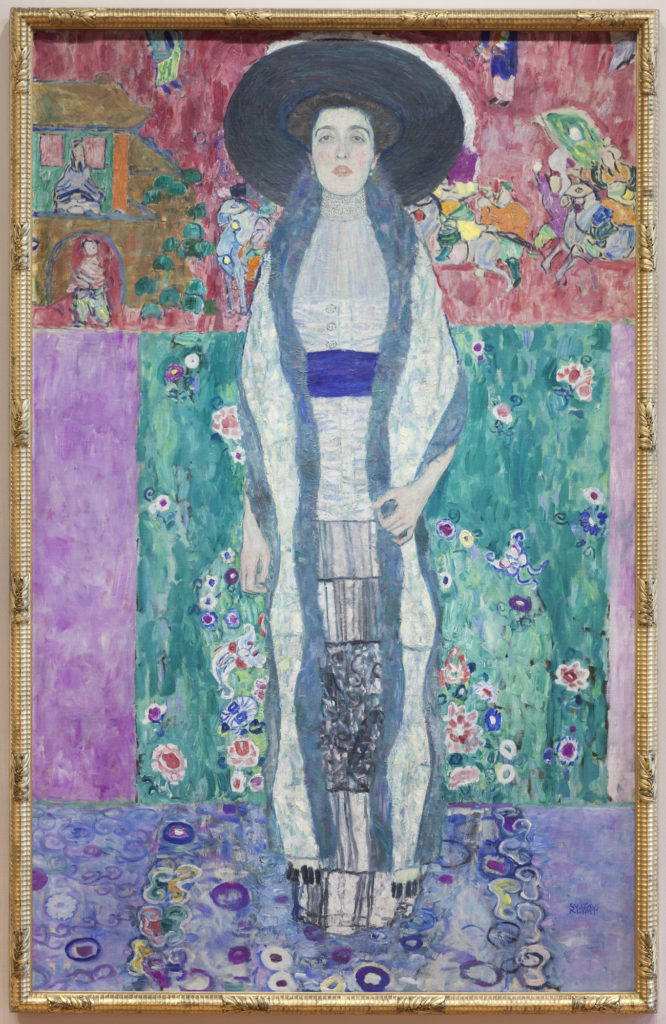
Gustav Klimt, Adele Bloch-Bauer II (1912). ©2014 MoMA. Photo: Jonathan Muzikar.
So much has happened in the Klimt market as well as in the larger “trophy” or “masterpiece” market in the past two decades. To some observers, the only thing more astounding than the Klimt price in 2006, is how many times since then that the artist’s work has broken that key benchmark and soared into this rarefied market territory, both at auction and in the private realm.
“Klimt is one of those rare artists of the early 20th century where prices have already exceeded the $100 million and $150 million mark,” Helena Newman told me.
In 2017, the portrait that Oprah Winfrey bought for $87.9 million in 2006 reportedly resold privately for $150 million. Russian billionaire Dmitry Rybolovlev also paid roughly $187 million around 2012 for Water Serpents II (1907), which had been flipped to him after a reported previous sale for $120 million. (The steep markup made it one of several works Rybolovlev later claimed he had been defrauded on, and over which he pursued Sotheby’s for allegedly aiding the scheme. A jury cleared Sotheby’s of aiding and abetting fraud in 2024). All of these numbers are firmly above the $108 million auction record set in 2023.

Serena Lederer in her salon in her Vienna apartment at Bartensteingasse 8, around 1930. On the wall the painting Portrait of Elisabeth Lederer by Gustav Klimt. Photo: by Martin Gerlach, ÖNB/Imagno/Getty Images, Austrian National Library, Picture Archives and Graphics Department.
When Klimt first hit that high water mark in 2006, only one work had ever sold for more than $100 million at auction—according to public records—and that was Pablo Picasso’s undeniable Rose-period masterpiece Boy With a Pipe (1905), sold at Sotheby’s New York in May 2004. No one cast any doubt on that landmark price. Not only was Picasso considered one of the best artists in the world—if not the best—that particular masterpiece also came with a sterling provenance. It had been tucked away in the blue chip collection of John Hay and Betsy Whitney for decades. The Whitneys had acquired the work for $30,000 in 1950.
Prior to that, the highest price for a work at auction was $82.5 million, paid in 1990 by a Japanese collector for Vincent Van Gogh’s 1890 Portrait of Dr. Gachet at the then-peaking art market.
How, market observers and art experts wondered aloud, had Klimt—the Austrian Secessionist whose particular style was not exactly everyone’s cup of tea—managed to vault to four times more than his previous record of $29.3 million and far outstrip both of the records for heavyweights like Picasso and Van Gogh?
Early on, most Americans gave Klimt and Schiele the cold shoulder. Following a 1965 show of works by both artists at New York’s Guggenheim Museum, one critic, Anthony West, writing in the Washington Post, called the exhibition “an attempt to float two Viennese second-raters.” He described some of Klimt’s later works as “dottily erotic.” He said The Kiss and other Klimt works showed “the essence of the vulgar fraud that his ‘art’ truly was.”
In a phone interview with the now late Robert Rosenblum at around the same time, he told me that looking at Klimt, whose work he personally liked, was “like going to a Viennese bakery.”
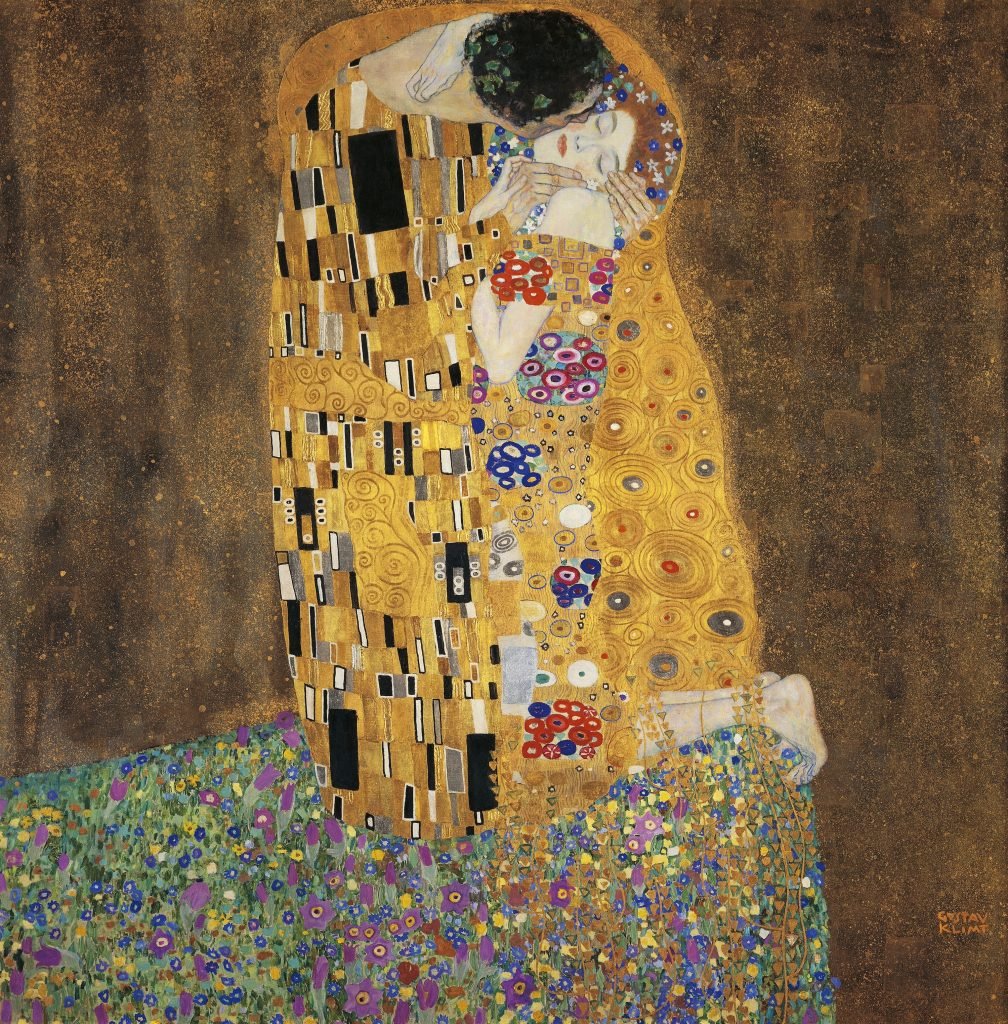
Gustav Klimt, The Kiss (1907). Photo by DeAgostini/Getty Images); Vienna, Österreichischer Galerie Belvedere (Art Gallery). Photo by DeAgostini/Getty Images.
In a New Yorker column in July 2006, critic Peter Schjeldahl said of Ronald’s purchase of Adele Bloch Bauer I for the Neue Galerie: “Is she worth the money? Not yet,” adding, “Lauder’s outlay predicts a level of cost that must either soon become common or be relegated in history as a bid too far.”
Indeed, numerous other artists have also become part of the $100 million club since the early aughts, including Francis Bacon, Jean-Michel Basquiat, Leonardo da Vinci, Amedeo Modigliani, Edward Munch, Andy Warhol, and Picasso (numerous times). There have also been some private sales that have gone as far as to grace the $200 million club, including Paul Cezanne’s Card Players, which sold to the nation of Qatar for $250 million in early 2012, and an 1892 painting by Paul Gauguin sold to a museum in Qatar for a whopping $300 million in 2015.
In 2006, I interviewed Ronald Lauder and others about the acquisition of Adele I. He talked about his particular passion for the work of Gustav Klimt and Egon Schiele. At a time when the art world seemed obsessed with Claude Monet and French Impressionism, Lauder said there was “an excitement of discovery,” about Schiele and Klimt, because no one else he knew seemed to know about them.
Lauder first saw Klimt’s art at age 14 on a trip to Austria. After traveling with his family in France, he said he went on his own specifically to see the Klimt paintings that were hanging in the Belvedere. He described it as “like finding the Holy Grail. “I was actually blown away by it. I had never seen such powerful images as The Kiss and Adele I.”
Of the price he paid for Adele I, Lauder told me in a phone interview “I didn’t even think of that. I knew there was nobody who wanted the painting more than me.” He called it “a once in a lifetime opportunity,” and has described it as “the Neue Galerie’s Mona Lisa.”

Gustav Klimt, Waldhag bei Unterach am Attersee (Forest Slope in Unterach on the Attersee). Courtesy of Sotheby’s
Schjeldahl turned even more sour on Klimt as evidenced by a 2012 column in the New Yorker titled “Changing My Mind About Gustav Klimt’s Adele.” Said Schjeldahl: “It’s not a painting at all, but a largish, flattish bauble: a thing. It is classic less of its time than of ours, by sole dint of the money sunk in it.”
Detractors aside, the hype surrounding the 2006 sale of Adele I clearly had a buoyant effect on the Klimt market. It was one of a group of five paintings restituted from the Belvedere Gallery to the heirs of Ferdinand Bloch-Bauer, a wealthy sugar magnate whose wife Adele was the subject of the portrait, which the Nazis stole in 1938 after Germany annexed Austria. The four other paintings that were returned to heir Maria Altmann, were sent to auction at Christie’s New York in November 2006 and all sold well over estimate. Los Angeles Times critic Christopher Knight said at the time: “The whole brouhaha over the sale of Adele I did nothing but enhance the market value of the remaining works.”
Today, Klimt is firmly entrenched in the pantheon of blue-chip masterpiece makers.
“That is about as good a Klimt one is likely to get on the open market,” said Jane Kallir, founder of the nonprofit Kallir Research Institute and former head of the Galerie St. Etienne, of the portrait hitting the block at Sotheby’s next week. Kallir’s grandfather, Otto, founded the gallery and was the first to organize a solo show of Klimt’s work in the U.S., in 1959.
But the bigger question on Kallir’s—and perhaps others’—minds, is whether the market, which she noted has grown “a little ‘thin’ at the top,” is strong enough to maintain robust prices for the other two Klimts, the landscapes, heading to the rostrum. Fortunately for the market, Kallir need not worry: all three works are backed by Sotheby’s own guarantee, meaning any unease now rests with the house, especially given that, to our knowledge, no third-party guarantor has stepped in—yet.
This story was originally published on April 6, 2015. It was updated on November 13, 2025, to reflect new movement in Klimt’s market and new comments and details about the forthcoming sale of Portrait of Elisabeth Lederer.
Correction (November 14, 2025): An earlier version of this article misstated the date of the Guggenheim exhibition. It took place in 1965, not 1956. The article also incorrectly stated that Otto Kallir was “one of the first” to show Gustav Klimt in the United States. In fact, Kallir was the first to do so, mounting the first one-person U.S. show of Klimt at the Galerie St. Etienne in 1959. This article has been updated.