Art & Tech
A Powerful Medieval Queen Returns—As an A.I. Avatar You Can Chat With
An exhibition at Leeds Castle invites visitors to converse with a digital recreation of Eleanor of Castile.
by
Richard Whiddington
 Share This Article
- Leeds Castle debuts an interactive A.I. avatar of Eleanor of Castile alongside an exhibition exploring the medieval queen’s life.
- The digital queen answers visitors’ questions and is aware of her surroundings.
- Created with SKC Studios, the avatar joins growing museum experiments using A.I. to animate historical figures.
Eleanor of Castile’s bronze effigy in London’s Westminster Abbey is considered a peerless work of medieval English sculpture. The pair of lions at her feet guard a figure cast with waves of cascading hair, a strong nose, and a magnanimous expression. She seems, as the cliché goes, an angel at rest. But what if the influential 13th-century queen woke up—what would she say, and what, in turn, would you like to ask her?
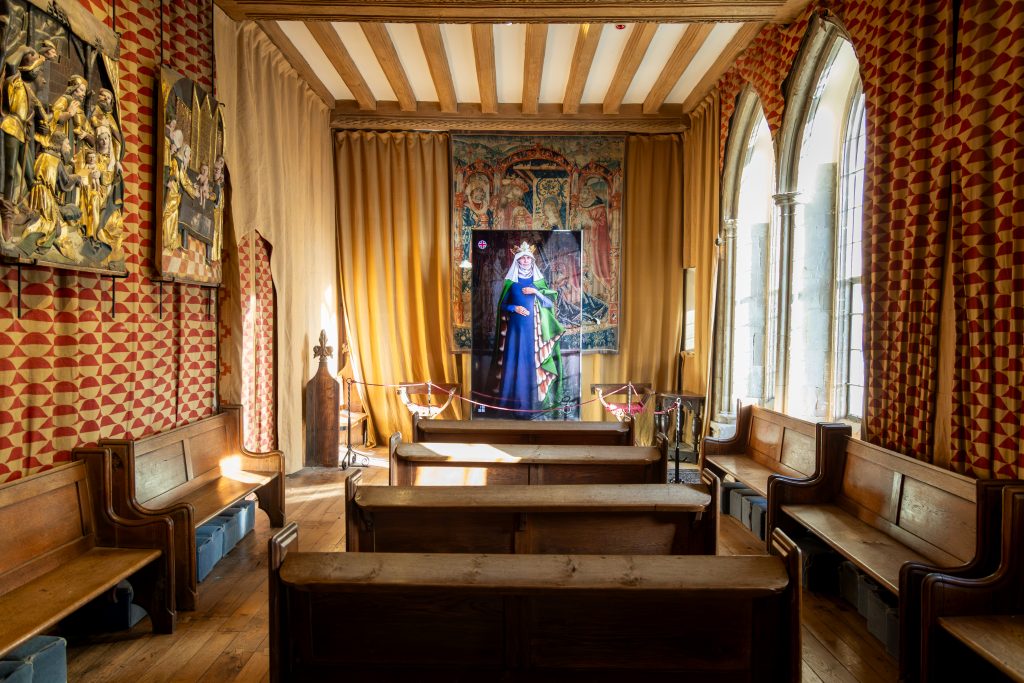
Some 40 miles to the south, the team at Leeds Castle, a property Eleanor acquired in 1278 and thoroughly transformed, has attempted to answer these very questions by creating an avatar of Edward I’s wife with the use of A.I. Meeting the digital ruler (which Leeds Castle calls “An Audience with a Queen”) arrives at the end of “Pilgrimage of Love: Eleanor of Castile,” an exhibition that traces her life story and unpacks her imprint on English society.
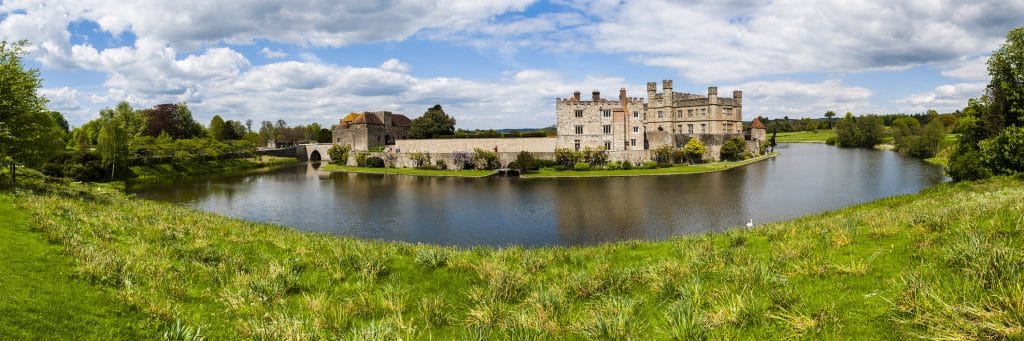
Leeds Castle in Maidstone, Kent. Photo: courtesy Getty Images.
Although Eleanor’s marriage to Edward in 1253 was political in nature (it settled a dispute over Gascony), the two were besotted and virtually inseparable. Over the course of a 30-year marriage she gave birth to 16 children (only six survived) and became Edward’s confidant, accompanying him on crusade in the early 1270s—hopefully A.I. Eleanor could clear up the truth behind the story that she sucked out the poison from a wound her husband received while they were in Acre. At home, Eleanor was an astute, if ruthless, businesswoman acquiring holdings and estates across the country. Again, we might ask A.I. Eleanor to explain her abuse of usury.
Leeds Castle (which she acquired at a steep royal discount) is held up as Eleanor’s leading architectural achievement. Under her watch, it changed from a Norman stronghold into a royal residence with Castilian flair. The Gloriette, a garden building built on an elevated site, comprises a three-story keep and Moorish-inspired gardens watered by a system of cisterns.
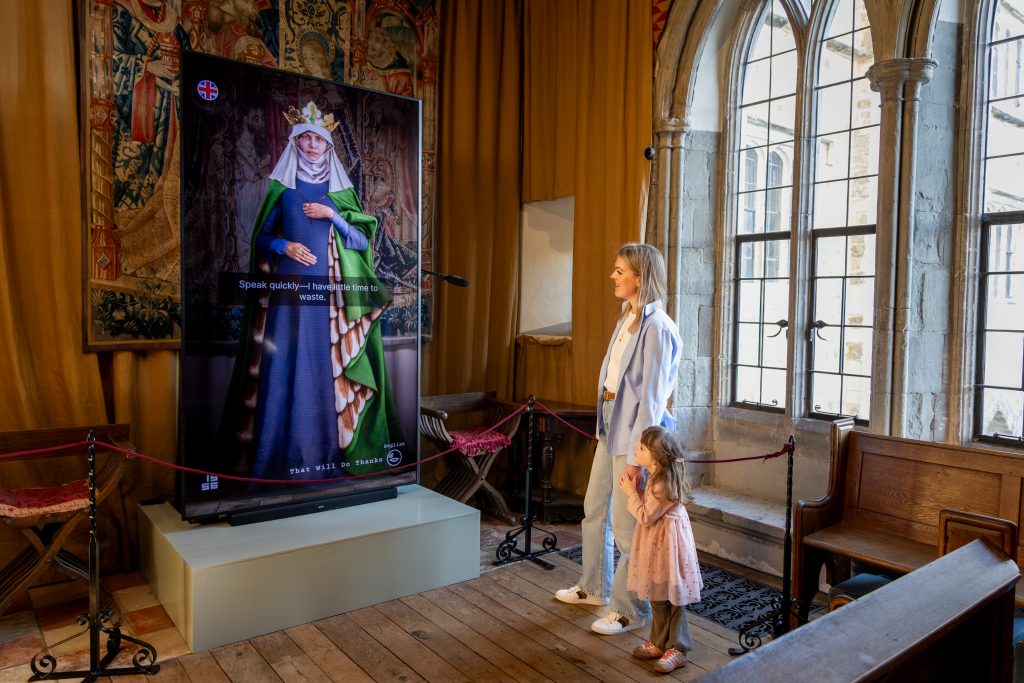
The A.I. Eleanor of Castile at Leeds Castle. Photo courtesy of Leeds Castle.
The A.I. Eleanor was created alongside the U.K.-based SKC Studios and has been labelled as the world’s first interactive historical A.I. avatar. This seems a stretch. The same studio previously developed an A.I. avatar of Alan Turing for Bletchley Park and is working on an A.I. avatar of William Gladstone for the Museum of the Prime Minister.
Besides, in recent years the likes of the Palace of Versailles and the Dalí Museum in Florida have tapped A.I. to let visitors interact with historic figures, the main difference here seems that Eleanor is aware of her surroundings (does she call it home?) and recognizes when a visitor approaches. She hovers on a screen shaped like a lancet window wearing an apple-green cloak whose string she clutches, as in her effigy, and backdropped by tapestries she popularized in England.
“This new avatar gives visitors a unique chance to meet Eleanor of Castile as a person with depth and personality,” Dominique Bouchard, engagement director at Leeds Castle, said in a statement. “It brings people into a more human relationship with the past.”
“Pilgrimage of Love: Eleanor of Castile” is on view at Leeds Castle in Kent, the U.K., March 9–November 1.