Art Collectors
Collector Reinhard Ernst on Championing the Legacy of Helen Frankenthaler
The Museum Reinhard Ernst in Wiesbaden is presenting the first major solo show of Frankenthaler in Germany in two decades.
by
Vivienne Chow
 Share This Article
At 79, German collector Reinhard Ernst isn’t finished chasing his dreams—and seeing them through. Having built his wealth with companies dedicated to manufacturing high-precision gears technology in the 1980s, the entrepreneur opened his own museum, Museum Reinhard Ernst, last year in Wiesbaden, Germany, where he is based.
Housed in a building designed by the late Pritzker Prize-winning Japanese architect Fumihiko Maki, Ernst’s museum is a new home for his trove of nearly 1,000 paintings and sculptures. The collection homes in on American, European, and Japanese works from artistic movements including Abstract Expressionism, Art Informel, and Gutai, and serves as a base to share his life-long passion for abstract art with locals and visitors.
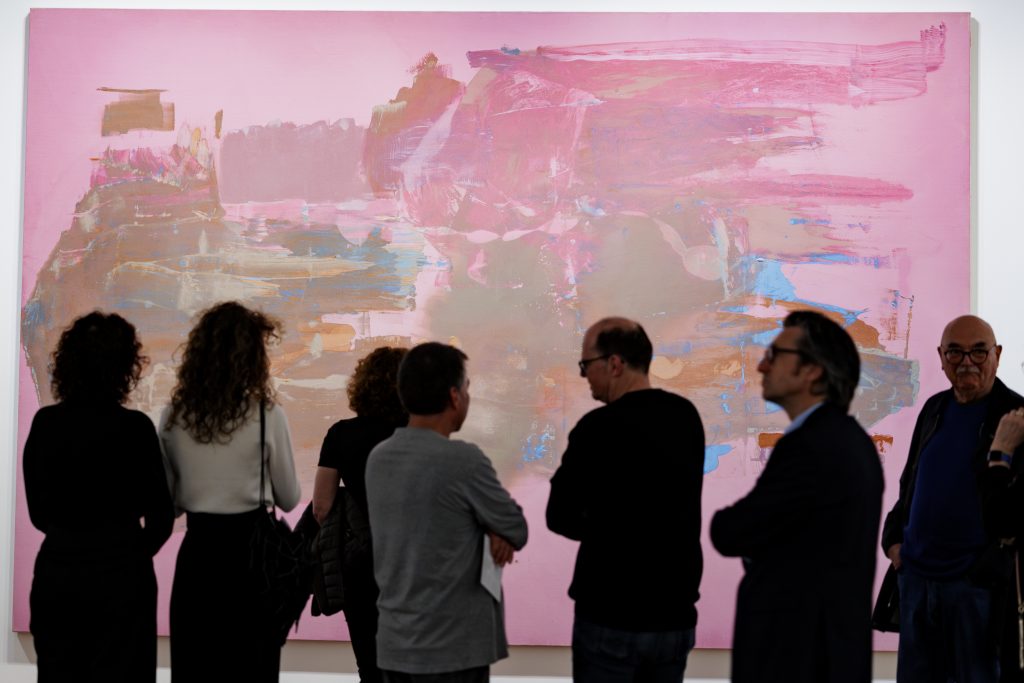
Preview of “Helen Frankenthaler. Move and Make” © mre Sascha Kopp.
The museum recently opened the exhibition “Helen Frankenthaler. Move and Make,” on view through September 28, tracing the career of the pioneering Abstract Expressionist painter. Frankenthaler is one of Ernst’s favorite artists and his is one of the largest private collections of her work in the world. The exhibition, featuring the artist’s paintings from Ernst’s collection, is the first major solo show of Frankenthaler in Germany in two decades. We caught up with Ernst to discuss how he began collecting, and the future of his passion project.
What was your first purchase?
I purchased my first works of art back in the mid 1980s. I bought two works on paper by Hubert Berke and Karl Otto Götz, and I believe I paid twenty and fifty D-Marks for them.
What is the most expensive work of art that you own?
The most expensive piece in my collection would be Frank Stella’s Khurasan Gate Variation III.
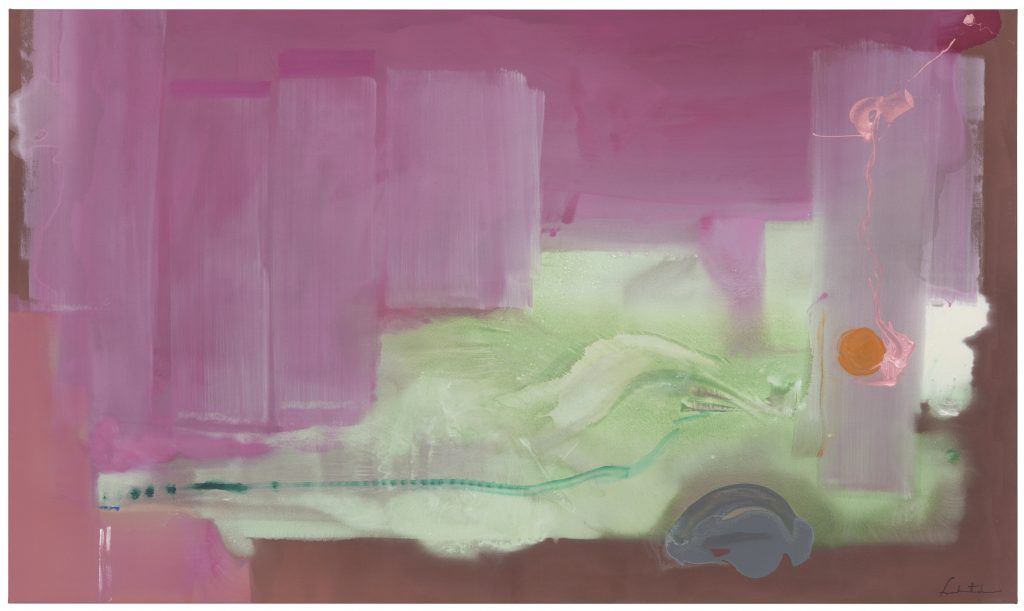
Helen Frankenthaler, Galileo (1989) © Helen Frankenthaler Foundation, Inc. VG Bild-Kunst, Bonn 2025. Photo: Martin Url, Frankfurt.
Where do you buy art most frequently and why?
My area of collection—abstract painting and sculpture after 1945—is usually much better and more extensively represented at auctions than in galleries. In the past, I have also bought in galleries in New York, Japan, and also in Germany. But I certainly find the largest selection at auctions. I would say the ratio is something like this: 80 percent of my purchases are made at auctions, 17 percent at galleries, and three percent directly from artists.
Is there an artwork you regret not purchasing?
I first saw a work by Helen Frankenthaler in the late 1980s in a gallery on Avenue Matignon in Paris. I was in Paris on business for an extended period of time, and since my wife and I had just finished building our house, I was on the lookout for “decorations.”
I spotted a smaller work on paper, about 50 by 60 cm (around 20 inches by 24 inches). It wasn’t particularly colorful, but with a few strokes and lines the sheet appeared “filled out,” although there was still a lot of blank space. Next to it lay a book with the name Frankenthaler on it—my first contact with who is now my favorite artist. The price was around 800 francs. But at that time my priority was to grow my business, and I felt that the work was too expensive. So I didn’t buy it.
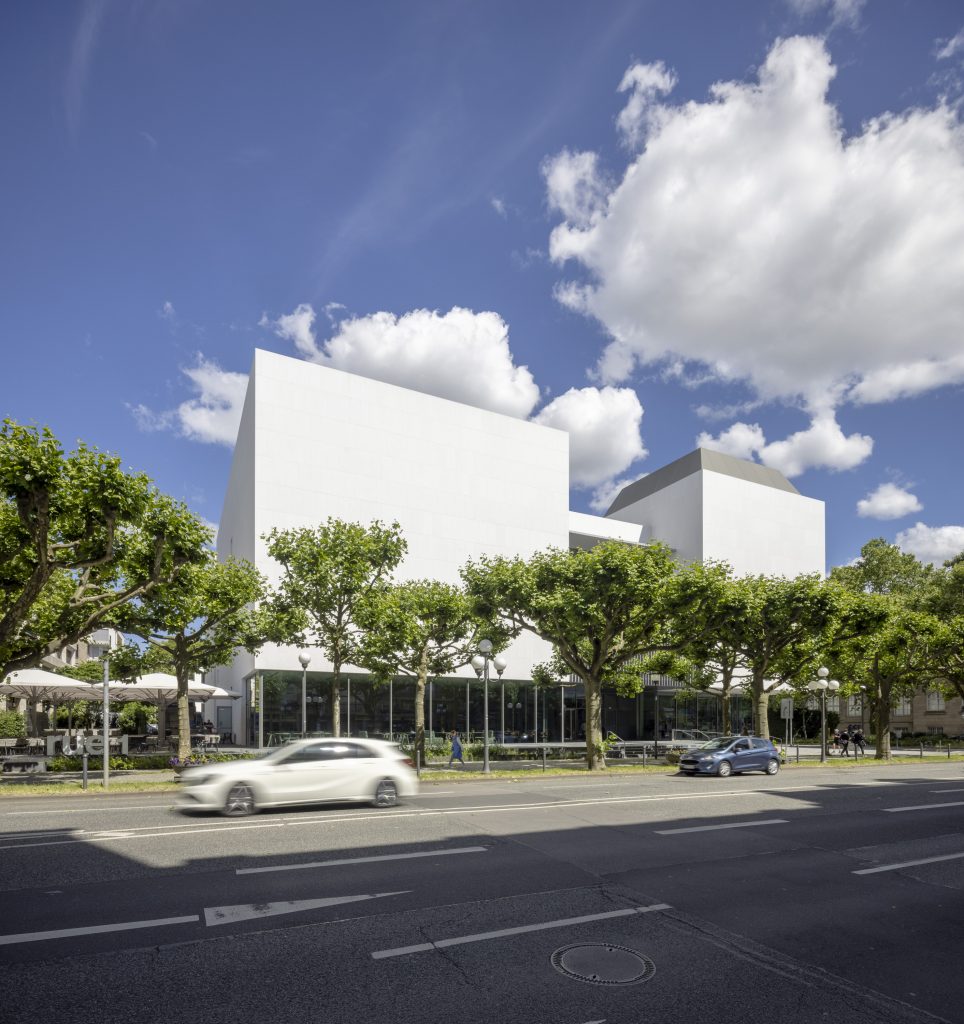
Museum Reinhard Ernst in Wiesbanden, Germany. © Reinhard & Sonja Ernst-Stiftung, Museum Reinhard Ernst, Foto HelbigMarburger.
And now you have the biggest private collection of Frankenthaler’s work. How did it all begin?
Back in 2010–2011, Frankenthaler was practically unknown in Germany, and indeed in Europe, at that time; American art in general was still of little significance in this country. During my frequent visits to New York, I saw paintings of a size and beauty I had never encountered before.
It was there that I first saw Helen Frankenthaler’s huge works and began to feel more and more drawn to her art. At first, I didn’t know why. Was it her colors, or her generous use of pictorial space? In 2011, while I was in New York for an extended period of time on business, I came across her work almost everywhere, and I saw paintings that I often acquired only years later at auctions. It was the time that I would describe as the beginning of my passion for Helen Frankenthaler.
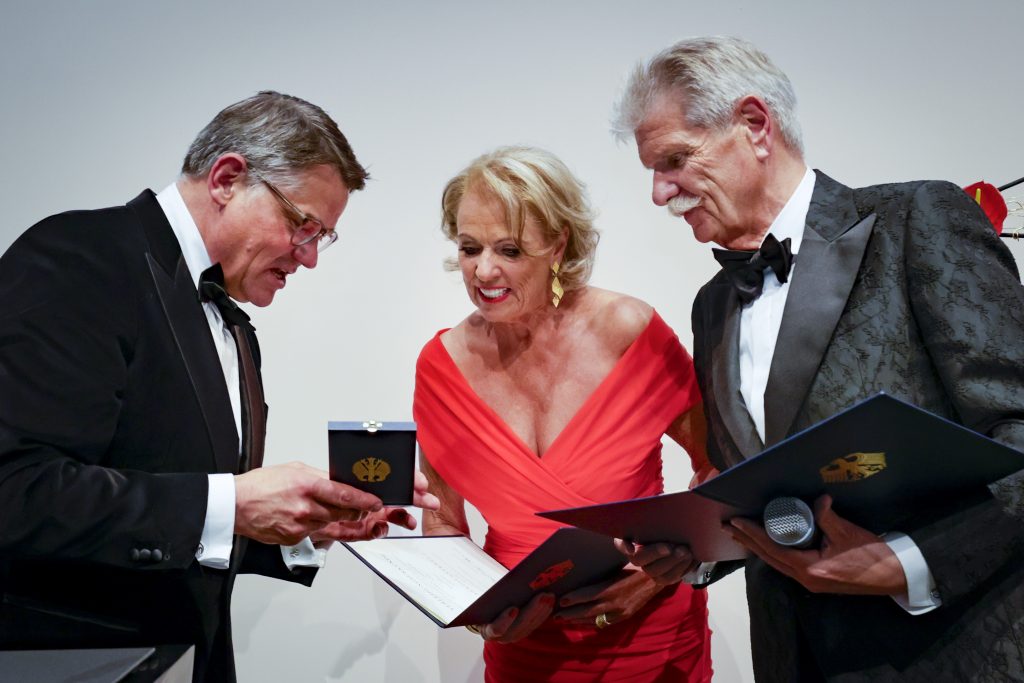
Reinhard Ernst Museum on Wilhelmstraße – Minister-President Boris Rhein surprised Sonja and Reinhard Ernst with the Federal Cross of Merit. Courtesy of Reinhard Ernst Museum.
I paid a visit at that time to what was probably one of the best-known galleries in New York. What I saw there was overwhelming. There wasn’t just one work by each artist; sometimes there were over ten. All the major names were represented: Frankenthaler, Robert Motherwell, Lee Krasner, Jackson Pollock, Mark Rothko, Franz Kline, Hans Hofmann, Morris Louis, Joan Mitchell, Kenneth Noland, Sam Francis, Perle Fine, to mention just a few. It was a veritable who’s who of American Abstract Expressionism. I saw four works by Frankenthaler. All four were wonderful, but I couldn’t make up my mind, mainly because of the prices being asked.
How big is your collection of Helen Frankenthaler? How many of them are featured in the current exhibition at your museum?
We currently own 50 of Frankenthaler’s works, covering five decades of her career. The earliest work of hers is Provincetown Harbor, a watercolor drawing from 1950, the latest one is a large watercolor painting from 1995. Currently on display in our museum are 32 of her works. In our current exhibition “Helen Frankenthaler. Move and Make,” many of these works are shown in Germany for the first time in decades.
Do you have a favorite? If so, which one is it and how did you acquire that? Why did you like it so much?
It’s hard to pinpoint a favorite painting. But I’m very fond of For Hiroshige. It’s the first painting by Frankenthaler I bought in 2011. I saw a picture I would never have associated with Frankenthaler up to that point. It was wonderful. I wanted to know more. The title, which is seldom very informative in abstract art, solved the puzzle for me. It read “For Hiroshige,” and so was a dedication.
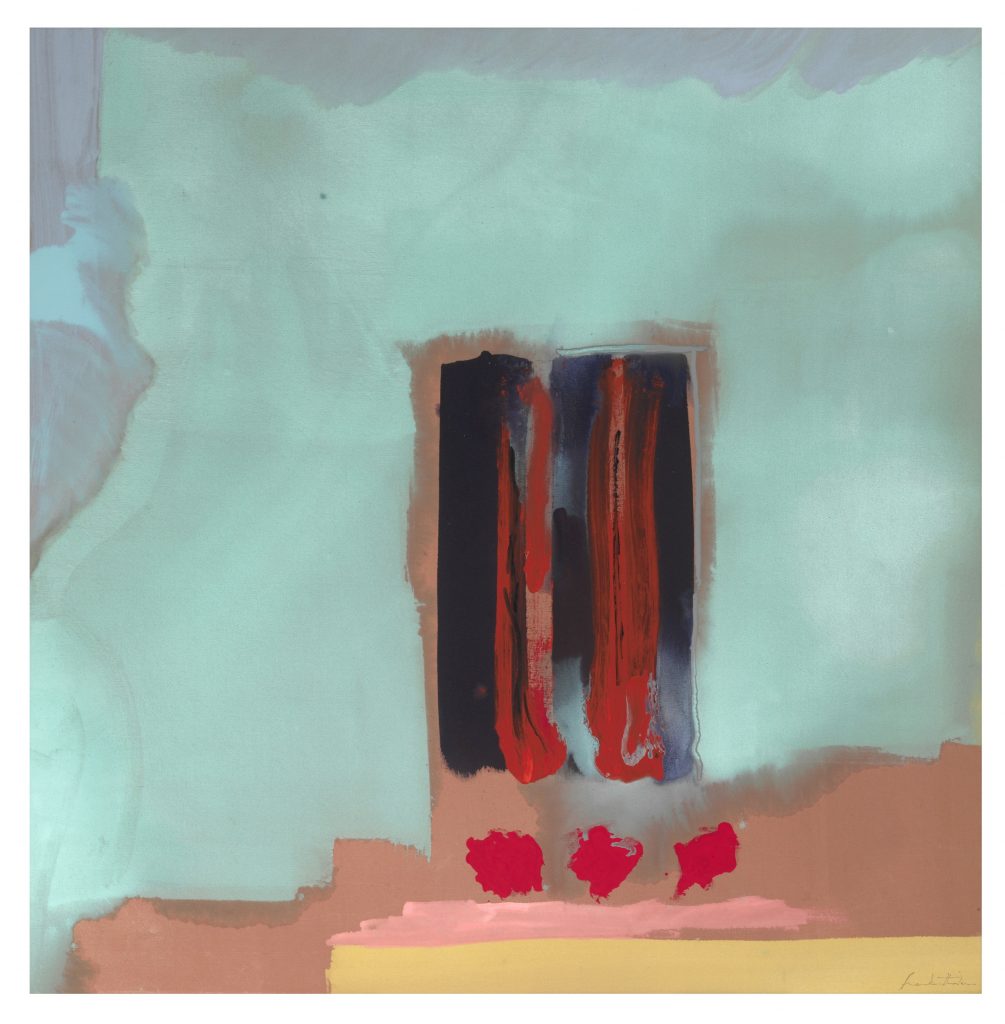
Helen Frankenthaler, Pyramid (1988) © Helen Frankenthaler Foundation, Inc. VG Bild-Kunst, Bonn 2025. Photo: Courtesy of Christie’s.
From my many trips to Japan, I was well acquainted with the Japanese landscape painter Hiroshige, who created large colourful woodcuts. What I saw in this picture by Frankenthaler was a landscape that filled the entire format, as is always the case with Hiroshige. You can see what Frankenthaler mastered brilliantly: although she paints “flat,” that is, without an impasto application of pigment, her pictures always show different layers and different perspectives. Among Frankenthaler’s landscape paintings, this picture, especially since it was painted in 1981, is a truly exceptional work. At the time of purchase, I didn’t realise that; I just liked it.
How do you incorporate art into the home? What work do you have hanging above your sofa? What about in your bathroom?
In our living room, we are looking at a very bright painting by Hans Hofmann, Dance of the Butterflies. Also, we have an Emil Schumacher there and an abstract painting by Julian Schnabel.
If you could steal one work of art without getting caught, what would it be and why?
I would steal Leonardo’s Mona Lisa and swap it for a series of Frankenthalers, Motherwells, and Stellas.
Has your collecting philosophy changed since you began buying art?
My philosophy has not changed. I still only collect abstract works of art after 1945, but I now attach more importance to large-format works and I am increasingly looking for young contemporary artists who engage with abstraction.