People
Maverick Painter and Critic Walter Robinson, Who Helmed Artnet Magazine, Is Dead at 74
He edited influential outlets, made alluring appropriation art, and with a rare, wry sensibility, helped define his era.

He edited influential outlets, made alluring appropriation art, and with a rare, wry sensibility, helped define his era.
Andrew Russeth
 ShareShare This Article
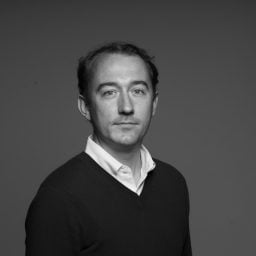
The painter, writer, and editor Walter Robinson, a stalwart contributor to the New York art scene for more than 50 years, died on Sunday at his home in New York. He was 74. The cause was cancer, according to his wife, the painting conservator Lisa Rosen.
Robinson was one of those exceedingly rare figures who always managed to be up to something new and intriguing. In the early 1970s, with Edit deAk and Joshua Cohn, he edited the punkish art journal Art-Rite, which they published on cheap newsprint, with covers designed by artists like Ed Ruscha and Dorothea Rockburne. (They produced it by secretly using equipment at his day job at the Jewish Week. Eventually, he was caught, and fired.)
In 1976, Robinson was a cofounder of Printed Matter, the nonprofit that champions artists’ books, and soon after, he became part of Collaborative Projects, a loose-knit collective that organized influential, fly-by-night shows in Lower Manhattan and most famously, a former massage parlor in Times Square. In 1978, he helped direct an early music video for the band Suicide that is in the collection of the Museum of Modern Art.
And in the 1980s, he plucked imagery from the covers of pulp novels and film posters—couples embracing, men holding revolvers—to make paintings that can be at once seductive and funny, as a member of the appropriation-minded Pictures Generation centered on the SoHo gallery Metro Pictures.
Robinson was omnipresent, a good quality in a journalist. After working as an editor at the East Village Eye and Art in America, he was tapped in 1995 to run Artnet Magazine, this publication’s predecessor. Robinson made it a lively and sometimes controversial forum, with dispatches from around the world and data-based reports on the art market. Scores of writers got their first bylines on the site alongside veterans like the future Pulitzer Prize winner Jerry Saltz, critic Donald Kuspit, and the acid-tongued columnist Charlie Finch. In his “Weekend Update” column, he recorded his impressions of gallery shows (he saw everything) in crisp prose, and included prices.
“He has one of the most munificent, open-minded, sharp-eyed takes on the art world,” Saltz, New York magazine’s senior art critic, told me when I profiled Robinson for the New York Observer in 2012. “He’s got an amazing bullshit detector.”
When Artnet Magazine was shuttered that year, Robinson devoted himself to painting and enjoyed a late-career resurgence, showing with dealers like Jeffrey Deitch and Vito Schnabel. “I like to say that Artnet’s founder and CEO, Hans Neuendorf, changed my life twice, both times for the better: when he hired me and when he fired me,” he wrote in a recent issue of the Brooklyn Rail. In a statement today, Neuendorf said that “Walter was a close friend for many years” and that “we trusted and respected each other without many words.”
The curator Barry Blinderman, who organized a traveling 2014 retrospective of Robinson’s work at the University Galleries of Illinois State University in Normal, termed him among “the most underrated, unknown, undervalued artists of the late 20th century.”

Installation view of “Walter Robinson: A Retrospective” at Jeffrey Deitch in New York. Photo courtesy Jeffrey Deitch
Robinson was born in Wilmington, Del., on July 18, 1950, and raised in Tulsa, Okla. He moved to New York to attend Columbia University in 1968 and never left. His father sold dynamite for DuPont, and his mother was a psychologist who was part of the WAVES (Women Accepted for Volunteer Emergency Service) during World War II.
Art in America’s editor, Brian O’Doherty, was one of his undergraduate professors, and tapped him, deAk, and Cohn to write reviews. “It was very difficult for me,” Robinson told me in 2012. “I remember I was in great agony.” He got over that, and became a prolific and freethinking critic, always happy to challenge prevailing interpretations and opinions.
In a 2014 essay, Robinson coined the term Zombie Formalism to describe a trend among certain painters for a kind of retrograde, processed-based abstraction that possessed “a simulacrum of originality.” As he saw it, “these pictures all have certain qualities—a chic strangeness, a mysterious drama, a meditative calm—that function well in the realm of high-end, hyper-contemporary interior design.”
When he was not writing for art magazines, Robinson was on social media, offering unconventional and usually generous commentary on goings-on about town. (“Puzzles without solutions are naturally engaging—like conspiracies?” he wrote in September, on Instagram, of David Salle’s recent A.I.-inflected work.) It is difficult, and painful, to imagine a New York art season going by without him weighing in.
Robinson’s reach extended to television in the 1990s, when he ran a public-access show called GalleryBeat with Paul Hasegawa-Overacker and Cathy Lebowitz. Armed with a video camera, the trio barnstormed contemporary art spaces, offering unfiltered commentary. On occasion, they were thrown out.
Expelled from an exhibition at Dia in Chelsea, which prohibited filming, Robinson slammed the institution with obvious relish. “They hardly ever do any exhibitions,” he said, “and they won’t let us in to show you a little TV. It’s the worst things about contemporary art—elitist, snobby, and stupid.” (Running from the 1993 to 2000, the show offers a valuable, grassroots archive of key shows of the era.)
Robinson’s 1986 piece “The Quest for Failure,” for Real Life magazine, captures something of his mordant, left-field sensibility. “With success becoming so common,” he proposed, “the only way to remain unique is to fail.”

Robinson, his wife, Lisa Rosen, and artist Mark Kostabi in Miami in 2005. Photo by Patrick McMullan/Patrick McMullan via Getty Images
Along with his pulp-noir scenes, Robinson made still lifes of cheeseburgers and bottles of beer, sweet-eyed kittens, mass-market clothing, and large abstract spin paintings, like those you might find at a carnival stall. “He did just about the most self-sabotaging work you could do,” his friend, the curator Carlo McCormick, once told me, with admiration.
Robinson found few buyers for those mid-’80s spin paintings and stopped making them; a younger artist in London minted a fortune with similar works a few years later. “If an artist is rejected, they should do more,” Robinson told me. “That was the great artistic failure. I remember when I first saw a Damien Hirst painting my heart sank. But you kind of get used to it.”
A piquant admixture of irony and commitment, a love for the vernacular, disposable stuff of postmodern American life, radiates from Robinson’s pictures. New Yorker critic Peter Schjeldahl wrote in 2016, “The art is like the man: wry, with blatant charms and slow-acting authenticities.”
Robinson’s survivors include his daughter, Antonia Dean, two grandchildren, and Rosen. His second wife, Beatrice Smith, Dean’s mother, died in 1988. In the 1990s, he penned a column about fatherhood for Paper called “It’s a Dad’s Life” and released Instant Art History: From Cave Art to Pop Art (1995), a lively guide to the field. Edgewise Press plans to release a collection of his criticism, dating from 1973 to 2023, later this year.
Writing in 2005 for a show at the New York alternative space White Columns, Robinson recalled a night in 1984 when the artist Mike Bidlo recreated Andy Warhol’s Factory at PS1 in 1984, complete with a band performing as the Velvet Underground. Artist David Wojnarowicz was in the role of Lou Reed. “Were there nurses handing out LSD?” he wrote. “Mike was silkscreening Marilyn paintings. It was an amazing party, part of an amazing time. If only I had taken more notes.”