Artists
25 of 2025: 5 Artists Transforming Time-Based Media
We spotlight 25 boundary-pushing artists who have been dominating the conversation this year.

by
Brian Boucher &
Vivienne Chow &
Jo Lawson-Tancred &
Annikka Olsen
 Share This Article
The art world is crowded, but some voices rise above. In this series, we spotlight 25 emerging artists who have been defining 2025: painters pushing the canvas forward, sculptors reinventing form, fiber artists weaving new narratives, performance artists transforming presence, and time-based visionaries bending film, sound, and technology. These are the talents shaping culture today—and the ones to watch. We highlight five artists who are transforming the possibilities of time-based media.
Ayoung Kim (b. 1979)

Portrait of Ayoung Kim. Courtesy of the artist and Gallery Hyundai. Photo: Kanghyuk (snakepool).
Ayoung Kim’s nearly bottomless résumé on her website is a telltale sign of how accomplished she already is. Born in 1979 and raised in Seoul, South Korea, Kim is a visionary of time-based media art, weaving together live-action footage, CGI, gaming technologies, A.I., and generative techniques to craft immersive speculative fictitious worlds that are not too far-fetched from today’s reality.
The award-winning artist has exhibited extensively over the past decade, including at the 2015 Venice Biennale’s “All the World’s Futures,” and, most recently, in a well-received solo exhibition at Hamburger Bahnhof in Berlin earlier this year.
Her Delivery Dancer’s Sphere, inspired by the experience of lockdown, has become one of her most iconic works; it follows a delivery worker and explores the world of gig economies. It was recently added to the Tate collection after it was acquired from Gallery Hyundai at Frieze London in 2023 via the Frieze Tate Fund.

Ayoung Kim, Delivery Dancer’s Arc: Inverse (2024). Installation view of ACC Future Prize 2024. Courtesy of the artist and ACC.
“What artists can do with technology is explore the uncertain possibilities it may conceal and deploy it in the most intuitive way,” Kim noted in a statement upon receiving the $100,000 LG Guggenheim Award earlier this year. “Neither a techno-determinist nor a techno-pessimist, I have always wanted to comment on the impact of technology in our society by using it.”
Looking ahead, her upcoming shows include a solo exhibition at MoMA PS1, New York, in November, and the M+ Facade x Powerhouse Commission in Hong Kong & Sydney, Australia.
—Vivienne Chow
Meriem Bennani (b. 1988)

Meriem Bennani. Photo: Valentina Somma. Courtesy of Fondazione Prada.
Artnet News was calling Moroccan-born, Brooklyn-based Meriem Bennani a rising star in 2022, when New York’s High Line and Audemars Piguet Contemporary commissioned a public work from her. By then, the artist had already gone viral with her 2 Lizards videos, created with filmmaker Orian Barki, which followed a pair of animated reptiles as they experienced the 2020 lockdown along with the rest of us. Even before that, she had received acclaim for her video installation Party on the Caps (2019), which Artnet critic Ben Davis struggled to even characterize, settling on “dystopian art mockumentary” as “close but not all the way there.” Her works reside in the collections of the Whitney Museum in New York, as well as the Museum of Modern Art in New York and the Musée d’Art Moderne de la Ville de Paris.

Installation view of Meriem Bennani’s 2024–25 exhibition “For My Best Family” at the Fondazione Prada, Milan.Photo: Delfino Sisto Legnani. Courtesy of Fondazione Prada.
In an age of “truthiness,” of widespread mistrust of even the existence of facts, Bennani’s semi-documentary method touches on something very momentous. “The process of my work starts off like the making of a documentary, but then I construct a narrative afterward,” the artist told us in 2020. “This is what happens in documentaries anyways, I am just transparent about it and I don’t try to make it look realistic like documentary filmmakers do.”
The artist’s next outing is coming up soon with a solo at Paris’s Lafayette Anticipations, “Sole crushing,” during Art Basel Paris, which promises “a new kind of orchestra mixing symphony and riot,” in which flip-flops, that humble footwear, will play a musical composition. That sounds like trademark Bennani, humorously using the everyday to create a thing of surprising and unlikely beauty. She’s also appearing in the 36th São Paulo Biennial (2025–26).
—Brian Boucher
Diego Marcon (b. 1985)

Diego Marcon. © Diego Marcon. Courtesy the artist and Sadie Coles HQ, London. Photo: Chiara Fossati.
When artist Diego Marcon won the 2018 prize from the MAXXI museum in Rome; the jury didn’t skimp on the praise, saying that it selected Marcon not only because of his formal innovativeness but also “for the ability to interpret with great efficacy the contradictory spirit of our times through fragments of the musical and artistic tradition of the past; for the poetic and evocative way of combining the global dimension with the existential dimension.”
His work doesn’t go easy on the viewer, reliably exploring dark subject matter. Fritz (2024) depicts an animated boy hanging from a noose while trying to yodel. Taylor Dafoe wrote for Artnet News that the latter piece “recalls the violent, uncanny work of Jordan Wolfson.”
Both curators and collectors have risen to the challenge: Cecilia Alemani made a place for him in “The Milk of Dreams,” the widely acclaimed main exhibition at the 2022 Venice Biennale (where he showed The Parents’ Room), and the artist has caught the eye of collectors like fintech entrepreneur Shane Akeroyd.
He has since presented solo exhibitions at Kunsthalle Basel, Kunstverein Hamburg, and Kunsthalle Wien, Austria. He has appeared in group shows at MACRO Museum of Contemporary Art of Rome and the Centre d’Art Contemporain in Geneva, Switzerland, among others.

Diego Marcon, The Parents’ Room (2021). © Diego Marcon. Courtesy the artist and Fondazione Donnaregina per le arti contemporanee, Naples.
The artist, who lives in Milan, had an exhibition earlier this year with London dealer Sadie Coles. A solo presentation of his work is on view at the Renaissance Society until November 23. In September, he was tapped to be the first artist to show a new work, Krapfen, as part of a major partnership between New York’s New Museum and Italy’s Fondazione Sandretto Re Rebaudengo; it was co-commissioned by Chicago’s Renaissance Society, where it is on view until November 23, along with the Vega Foundation, Lafayette Anticipations, the New Museum, and Fondazione Re Rebaudengo. It will travel to the other venues, with dates to be announced.
—Brian Boucher
Karimah Ashadu (b. 1985)

Karimah Ashadu. Photo: Jenny Schäfer.
There’s no greater art world honor than sweeping top titles at the Venice Biennale, so it’s no surprise that filmmaker and sculptor Karimah Ashadu has been turning heads since her win of the coveted Silver Lion award last year. The prize, which goes to a promising young participant in the main exhibition, commended Machine Boys (2024), a film that follows a community of young migrant men in Lagos who ride illegal motorbike taxis.
Unlike many artists who keep a safe distance when zooming their lens on a subject, Ashadu dedicated many years to getting to know the men and earning their trust. As a result, this study of their triumphs and joys, as well as the economic precarity of a life spent on society’s margins, was “sensitive and intimate,” according to the award’s jury.

Installation view of Karimah Ashadu, Machine Boys at Canal Projects, 9 May – 26 July 2025. Photo: Izzy Leung, courtesy the artist and Sadie Coles HQ, London.
The widespread critical acclaim for Machine Boys, as well as its world tour of film festivals and an exhibition at Canal Projects in New York over the summer, marked Ashadu’s major breakthrough.
Born in London and raised in Nigeria, the artist currently works between Lagos and Hamburg. She has produced several more films that address similar themes of labor, migration, and systems of oppression within the context of Nigeria and its diaspora. Take, Plateau, exhibited at the Secession in Vienna in 2021. The film introduces us to a group of undocumented tin-miners working in Nigeria’s Jos-Plateau, an area that has been exploited for its minerals since the days of British colonial rule. Ashadu has readapted the 2021 project for installation in Munich’s historic passage at Marienplatz, which will be launching this October.
The artist has also been busy cooking up something new for audiences of her upcoming solo show opening in October at Camden Art Centre in London. Coinciding with the international buzz around Frieze London, “Tendered” will include the debut of Muscle (2025), a film about the community of bodybuilders who inhabit Lagos’s slums and an unflinching portrait of patriarchy and hyper-masculinity. As is the case for many of Ashadu’s projects, viewers can expect to see the moving image element embedded within an installation of corresponding sculptural works.
—Jo Lawson-Tancred
Matt Copson (b. 1992)

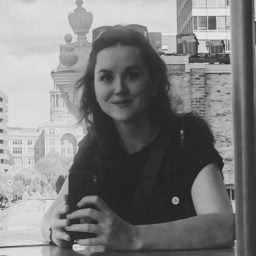
Matt Copson. Photo: Ronan Park.
The art world has been lit up by the laser-projected drawings of Matt Copson, the British artist who currently splits his time between London and Los Angeles.
Most recently, he was the subject of the solo exhibition “Coming of Age. Age of Coming. Of Coming Age.” at Berlin’s KW Institute for Contemporary Art, which saw his operatic world come to life in a 30-minute work in the museum’s main hall-turned-theater. Comprised of three acts, each projected on a different wall, the work starred The Baby, a larger-than-life infant who moved freely between these walls, but with the illustrated props of the animation remaining where they were. Accompanied by a soundtrack sung by a boy soprano, The Baby could also be found addressing the viewer directly in the specially commissioned work, Thank You (2025).

Matt Copson, Coming of Age (2020).Photo: Benjamin Baltus. Courtesy the artist and Lodovico Corsini, Brussels.
Taking inspiration from contemporary pop culture to ancient mythology and everything in between, Copson’s practice interrogates increasingly prevalent issues within the Information Age and the nuances of attention economics.
The show at KW Institute follows on the heels of another high-profile project: in 2024, the Los Angeles Philharmonic staged Last Days, an operatic presentation helmed by Copson alongside composer Oliver Leith, which Copson had formerly debuted a version of it at the Royal Opera House, London. Prior institutional solos include “Gred, Blorange, Yeluple” at the Swiss Institute, New York, in 2019, and “Blorange” at the Louis Vuitton Foundation, Paris, in 2018.
Moving between lasers, a medium most associated with nightclubs and raves, music, and other modes bounded by temporality, Copson has still managed to develop a style and body of work that is concrete in the strength of its creative vision.
—Annikka Olsen
Related Articles
-